During the second half of 2025, these are the poems that leached through me with their eloquence on the red lamps of hindsight, a paper wasp kingdom, the round jubilance of peach and so much more. Read on …
‘Separation’ by Marie Howe
Driving out of town, I see him crossing / the Brooks Pharmacy parking lot, and remember/ how he would drop to his knees in the kitchen / and press his face to my dress, his cheek flat against // my belly as if he were listening for something. /
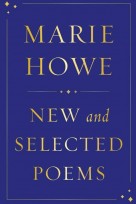
Marie Howe was born in 1950 in Rochester, New York. She is the author of New and Selected Poems (W. W. Norton, 2024), winner of the 2025 Pulitzer Prize for Poetry; Magdalene (W. W. Norton, 2017), which was long-listed for the National Book Award; The Kingdom of Ordinary Time (W. W. Norton, 2009), which was a finalist for the Los Angeles Times Book Prize; What the Living Do (W. W. Norton, 1998); and The Good Thief (Persea Books, 1988), which was selected by Margaret Atwood for the 1987 National Poetry Series. What the Living Do is in many ways an elegy for Howe’s brother, John, who died of AIDS in 1989. ‘Separation’ is from New and Selected Poems.
‘For the Cult-themed Party’ by Jacques J Rancourt
persisting. We couldn’t pretend / to be asleep much longer. Even in Nijinsky’s ballet, // before its graphic depiction of desire, / a faun first wakes centre stage on a set
Jacques J. Rancourt is the author of Brocken Spectre (Alice James Books, 2021) and Novena (Pleiades Press, 2017). Set in San Francisco, Brocken Spectre examines the way the past presses up against the present. The speaker, raised in the wake of the AIDS crisis, engages with ideas of belatedness, of looking back to a past that cannot be inhabited, of the ethics of memory, and of the dangers in memorialising and romanticising tragedy.
‘Haul.’ by Izzy Roberts-Orr
I have been trying to mine you, / but you are not a quarry. // You tell me there is nothing in you / but coal / seams beneath the surface / that might burn for millions of years / if lit.
Izzy Roberts-Orr is a poet, writer and arts worker based on Wurundjeri Woi Wurrung Country in regional Victoria. Her debut poetry collection, Raw Salt (Vagabond Press, 2024) won the 2024 Anne Elder Award for a debut collection. It was also the recipient of a Wheeler Centre Hot Desk Fellowship, Bundanon Artist Residency and Shortlisted for the Colorado Prize for Poetry. She is a recipient of the Marten Bequest Scholarship for Poetry, Varuna Pitch Me! Fellowship and the BR Whiting Residency (Rome) and works as Creative Producer for Red Room Poetry.
‘The Art of Unselfing’ by Safiya Sinclair
Your starved homesickness. The paper wasp kingdom / you set fire to, watched for days until it burnt a city in you. / Until a family your hands could not save // became the hurricane. How love is still unrooting you.
Safiya Sinclair is author of the memoir How to Say Babylon, winner of the National Book Critics Circle Award and the OCM Bocas Prize for Caribbean Literature. She is also the author of the poetry collection Cannibal, winner of a Whiting Award, the American Academy of Arts and Letters’ Metcalf Award, the OCM Bocas Prize for Caribbean Poetry, the Phillis Wheatley Book Award, and the Prairie Schooner Book Prize in Poetry. Cannibal was selected as one of the American Library Association’s Notable Books of the Year (2017). She is a Professor of Creative Writing at Arizona State University.
‘Headlamps’ by Marjorie Lotfi
She lets the red lamps of hindsight / burn out on a road she’s already / forgotten. The car is a womb and she / is unborn. Where are you from? / people ask. She refuses to say.
Marjorie Lofti was born in New Orleans, spent her childhood in Tehran, and lived in New York before moving to the UK in 1999. She is the author of The Wrong Person to Ask (Bloodaxe Books, 2023), which won the 2024 Felix Dennis Forward Prize for Best First Collection. Marjorie was one of the winners of the inaugural James Berry Prize and a Poetry Book Society Special Commendation. She is one of the UNESCO Cities of Literature’s ILX 10 ‘Rising Stars of UK Writing’, a Royal Literary Fund Fellow and a member of Writer’s Mosaic. ‘Headlamps’ is from Women on the Road, edited by Iain Morrison (Fruitmarket) – and you should listen to this one. Marjorie’s rendition is beautiful.
‘Picture of Girl and Small Boy (Burji, Gaza, 2014)’ by Marjorie Lotfi
for light. Her hair, scraped back into a ponytail, / is open to sky; remnants of buildings filter down / one concrete chunk at a time, and the midday bells / of rockets ring out above her. She carries a boy
‘Dirge without Music’ by Edna St. Vincent Millay
More precious was the light in your eyes than all the roses in the world.
Edna St. Vincent Millay (1892-1950) won the Pulitzer Prize for Poetry in 1923. Her passionate lyrics and superbly crafted sonnets have thrilled generations of readers long after the notoriously bohemian lifestyle she led in Greenwich Village in the 1920s ceased to shock them. She is noted for both her dramatic works, including Aria da capo, The Lamp and the Bell, and the libretto composed for an opera, The King’s Henchman, and for such lyric verses as ‘Renascence’ and the poems found in the collections A Few Figs From Thistles, Second April, and The Ballad of the Harp-Weaver, winner of the Pulitzer Prize in 1923. She was one of the most skilful writers of sonnets in the 20th century.
‘Hallaig’ by Sorley MacLean
sniffing at the grass-grown ruined homes; / his eye will freeze in the wood, / his blood will not be traced while I live.
a’ snòtach nan làraichean feòir; / thig reothadh air a shùil sa choille: / chan fhaighear lorg air fhuil rim bheò.
Sorley MacLean (1911-1996) was born on the island of Raasay, off Skye. He was brought up within a family and community immersed in Gaelic language and culture, particularly song. He studied English at Edinburgh University from 1929, taking a first-class honours degree and eventually adopted Gaelic as the medium most appropriate for his poetry. MacLean also translated much of his own work into English, opening it up to a wider public than the some 80,000 speakers of the Gaelic language. ‘Hallaig’ was first published in the Gaelic journal Gairm in 1954 and is an intense meditation on the effects of the Clearances. MacLean’s home island Raasay was cleared (during the Scottish Clearances) between 1852 and 1854.
‘Trim’ by Yali Saweda Kamara
I wear / your black / cursive / on my chin, / & imagine / being the / teenaged boy / that you will / raise / with a lover / that looks / like me.
Yalie Saweda Kamara is a Sierra Leonean American writer, educator and researcher. Selected as the 2022–2023 Cincinnati and Mercantile Library Poet Laureate (2-year term) and a 2023 Academy of American Poets Laureate Fellow, she is the editor of the anthology What You Need to Know About Me: Young Writers on Their Experience of Immigration. She is the author of the full-length collection Besaydoo (Milkweed Editions, 2024) and the chapbooks A Brief Biography of My Name and When the Living Sing. She is an assistant professor of English at Xavier University and resides in Cincinnati.
‘The Key of Water’ by Octavio Paz (translated from Spanish by Paul Weinfield)
You said: / Le pays est plein de sources. / That night I dipped my hands in your breasts.
Octavio Paz was born in 1914 in Mexico City to a family of Spanish and native Mexican descent. He was educated in law and literature at the National Autonomous University of Mexico. In 1962, Paz became Mexico’s ambassador to India and resigned six years later in protest. Octavio Paz received the Miguel de Cervantes Prize in 1981, the Neustadt International Prize for Literature in 1982, and the 1990 Nobel Prize for Literature. He died in 1998.
‘Ellen West’ by Frank Bidart
At twelve, pancakes / became the most terrible thought there is … // I shall defeat ‘Nature’. // In the hospital, when they / weigh me, I wear weights secretly sewn into my belt.
Frank Bidart is the author of a dozen collections of poetry, including Metaphysical Dog, Watching the Spring Festival, Star Dust, Desire, and In the Western Night: Collected Poems 1965–1990. He has won many prizes, including the Wallace Stevens Award, the Bollingen Prize for Poetry, and the National Book Critics Circle Award. His book Half-light: Collected Poems 1965–2016 won the 2018 Pulitzer Prize and the 2017 National Book Award. He lives in Cambridge, Massachusetts. ‘Ellen West’ is a persona poem based on the English translation of the case study ‘Der Fall Ellen West’ by Dr Ludwig Binswanger. The poem follows the life and death of Ellen West, a woman who suffered from anorexia nervosa and an identity crisis.
‘Half-Light’ by Frank Bidart
We have not spoken in years. I thought / perhaps at ninety or a hundred, two // broken-down old men, we wouldn’t / give a damn, and find speech.
‘Chocolate’ by Jinhao Xie
Summer rests his head on your shoulder, / thirsts on your teenage sweat; a young love bursts / on twines and twigs. Green Beetle parks / by the foot of the hill. It’s summer. Everything melts.
Jinhao Xie is a UK-based poet, born in Chengdu. Their poetry, inspired by the mundane, has appeared in Poetry Review, Harana, Bath Magg, and elsewhere.
‘Why I am not a good kisser’ by Mary Ruefle
Because every kiss is like throwing a pair of doll’s eyes / Into the air and trying to follow them with your own.
Mary Ruefle is the author of My Private Property (Wave Books, 2016), Trances of the Blast (Wave Books, 2013) and Madness, Rack, and Honey: Collected Lectures (Wave Books, 2012), a finalist for the National Book Critics Circle Award in Criticism and winner of the William Carlos Williams Award from the Poetry Society of America. She has published ten books of poetry, a book of prose (The Most of It, 2008), and a comic book, Go Home and Go to Bed!. Ruefle is the recipient of numerous honours, teaches in the MFA program at Vermont College and was the poet laureate of Vermont from 2019 to 2024. In 2020, she was named an Academy of American Poets Laureate Fellow.
‘In the chemo room, I wear mittens made of ice so I don’t lose my fingernails. But I took a risk today to write this down’ by Andrea Gibson
Why did I go so long believing I owed the world / my disappointment? Why did I want to take // the world by storm when I could have taken it / by sunshine, by rosewater, by the cactus flowers / on the side of the road where I broke down? /
Andrea Gibson (1975-2025) was born in Calais, Maine. They authored seven albums and seven poetry books, including You Better Be Lightning (Button Poetry, 2021); Lord of the Butterflies (Button Poetry, 2018); Take Me With You (Penguin, 2018); Pansy (Write Bloody Publishing, 2015); The Madness Vase (Write Bloody Publishing, 2011); and Pole Dancing to Gospel Hymns (Write Bloody Publishing, 2010). They co-authored the prose work How Poetry Can Change Your Heart (Chronicle Books, 2019). They also edited We Will Be Shelter: Poems for Survival (Write Bloody Publishing, 2014), an anthology that addresses social justice issues. In 2008, Gibson won the first Women of the World Poetry Slam. In 2023, they were poet laureate of Colorado and in 2024 received an Academy of American Poets Laureate Fellowship. Come See Me in the Good Light (2025) is a film about their life.
‘Artichokes’ by Bianca Stone
I’ve seen the last of it: an ache. / To be saved. There are wildfires / switching course to worry about. / I take my daughter to the lake and watch her feel the tiny waves. / A seagull lifts a sandwich right from my hands.
Bianca Stone became poet laureate of Vermont in May 2024. Bianca Stone is a granddaughter of acclaimed Goshen poet Ruth Stone, who served as Vermont’s sixth poet laureate, from 2007 to 2011. The elder Stone, a National Book Award winner and Pulitzer Prize finalist, died in 2011 at age 96. Since then, Bianca Stone has carried on her grandmother’s legacy. Soon after Ruth’s death, Stone cofounded the poetry nonprofit Ruth Stone House in Goshen, which she renovated and turned into an artists’ retreat; it’s now listed on the National Register of Historic Places. There, Stone teaches in-person and online classes on poetry; hosts a podcast, Ode & Psyche; and serves as editor-at-large of the online art and poetry quarterly Iterant.
‘#blessed’ by Rosalie Moffett
This morning, all I want is to look unharmed, to know you were / meeting me at the mouth of this world. What to call that feeling in the mind like a magnet pulling toward the fridge? // Blessing inches toward blessure. A green beetle hovers above the speckled throat of a lily. My longing unfolds like / a pocketknife. I am so close to answering you.
Rosalie Moffett is the author of the poetry collections Making a Living (Milkweed Editions, 2025), Nervous System (Ecco, 2019), which was chosen by Monica Youn for the National Poetry Series Prize and listed by the New York Times as a New and Notable book, and June in Eden (OSU Press, 2017). She has been awarded a Wallace Stegner Fellowship from Stanford University, and her work has appeared in The American Poetry Review, POETRY Magazine, New England Review, and Kenyon Review, among others. She is an Associate Professor at the University of Southern Indiana, and the senior poetry editor for the Southern Indiana Review.
‘From Blossoms’ by Li-Young Lee
O, to take what we love inside, / to carry within us an orchard, to eat / not only the skin, but the shade, / not only the sugar, but the days, to hold / the fruit in our hands, adore it, then bite into / the round jubilance of peach.
Li-Young Lee is the author of The Invention of the Darling (W. W. Norton, 2024); The Undressing (W. W. Norton, 2018); Behind My Eyes (W. W. Norton, 2008); Book of My Nights (BOA Editions, 2001), which won the 2002 William Carlos Williams Award; The City in Which I Love You (BOA Editions, 1990), which was the 1990 Lamont Poetry Selection; and Rose (BOA Editions, 1986), which won the Delmore Schwartz Memorial Poetry Award. Lee is the recipient of the 2024 Ruth Lilly Poetry Prize and many other prestigious prizes.
‘We Came Here to Get Away from You’ by Donika Kelly
leached into my softest parts. I wanted / to hold her shoulders, vomit into her mouth / this water full of dead or dying, / to fill her with a little knowing, / change her, heavy her, let the knowing wash
Donika Kelly is the author of The Natural Order of Things, The Renunciations and Bestiary. A recipient of a fellowship from the National Endowment for the Arts, she is a Cave Canem graduate fellow and Pushcart Prize winner. She teaches creative writing at the University of Iowa.


Recent Comments