Twelve stories I read in the second half of 2025 that made me wince at the world’s harshness and marvel at life’s goodness.
‘The Husband Stitch’ by Carmen Maria Machado
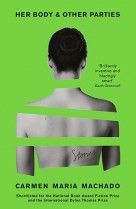
‘The Husband Stitch’ is from Carmen Maria Machado widely lauded short story collection Her Body and Other Parties. Its title refers to the extra stitch sometimes given to a woman childbirth. The purpose of the stitch is to make the vagina tighter than it was before childbirth, to maximise the husband’s pleasure during sex. Machado’s narrator tells a rollicking story of love, marriage, bearing a son and being betrayed by the husband she loves. Interwoven through her story, Machado offers us horror stories and commentary that acts like stage directions, to reinforce what’s going on. Ultimately, the story is a powerful exposé of patriarchy and how even the good men (like our narrator’s husband) let women down by trampling their truths and silencing their voices. When writer and teacher Jane Dykema is studying ‘The Husband Stitch’ with her students, she asks them: ‘Do you feel it, too? Or can you imagine it? The perils of living in a world made by a different gender? The justified and unjustified mistrust? The near-constant experience of being disbelieved, of learning to question your own sanity?’ Here’s a quote …
‘I am captivated by her, there is no other way to put it. There is something easy about her, but not easy the way I was – the way I am. She’s like dough, how the give of it beneath kneading hands disguises its sturdiness, its potential.’
Carmen Maria Machado is the author of the bestselling memoir In the Dream House, the graphic novel The Low, Low Woods, and the award-winning short story collection Her Body and Other Parties. She has been a finalist for the National Book Award and the winner of the Bard Fiction Prize, the Lambda Literary Award for Lesbian Fiction, the Lambda Literary Award for LGBTQ Nonfiction, the Brooklyn Public Library Literature Prize, the Shirley Jackson Award, and the National Book Critics Circle’s John Leonard Prize. In 2018, the New York Times listed Her Body and Other Parties as a member of ‘The New Vanguard,’ one of ‘15 remarkable books by women that are shaping the way we read and write fiction in the 21st century.’
‘Among the Ruins’ by Brian Friel
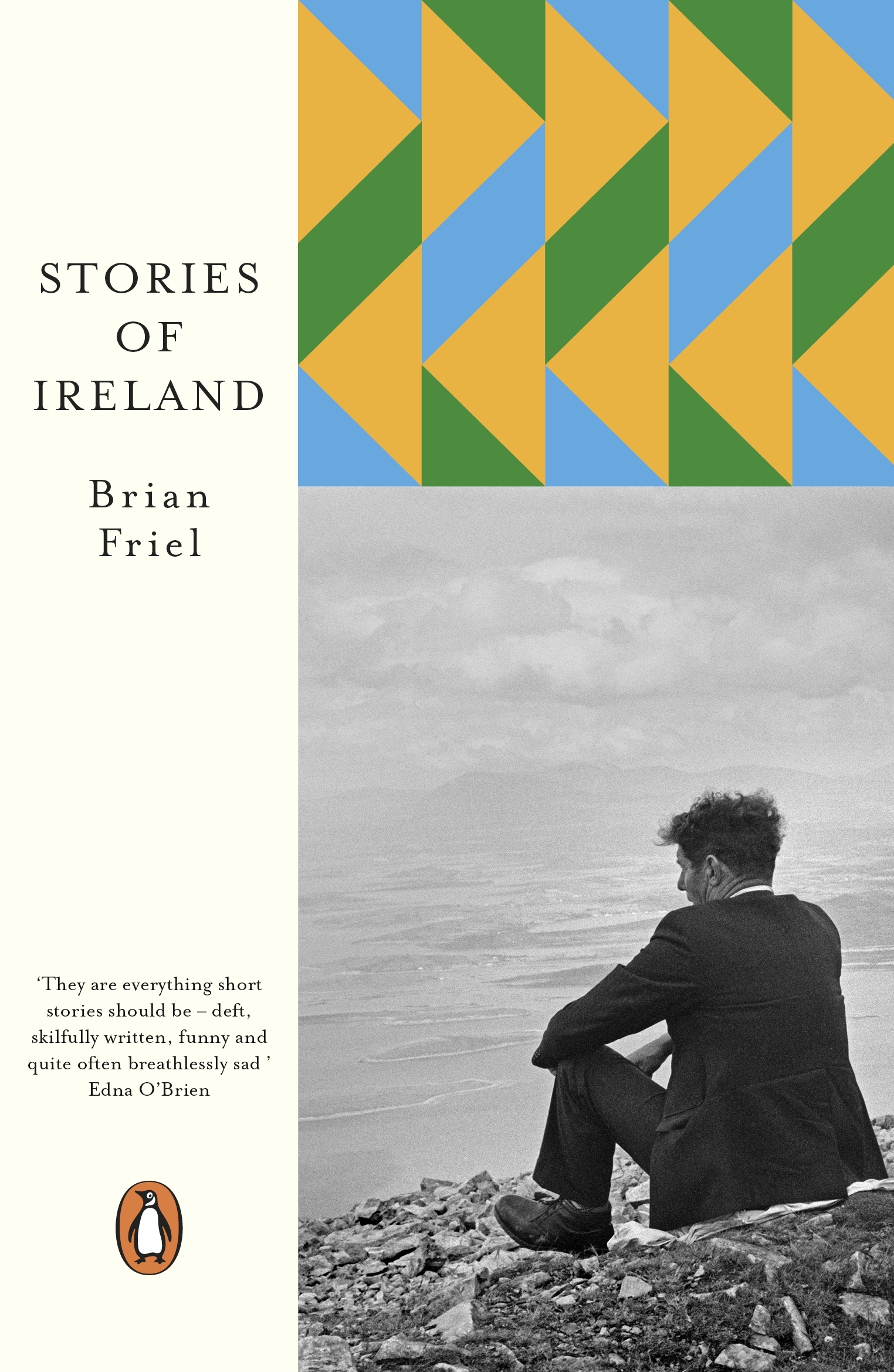
I thoroughly agree with Louise Kennedy who says in her introduction to Colin Friel’s Stories of Ireland that this collection is magical and its prose is glorious. Consequently, I found it extremely hard to decide which story to feature here. My list of strong contenders made me wonder what sort of spell Friel had cast on me given I never thought I’d appreciate the subject matter of a story I dubbed ‘the cockfighting one’ (‘Ginger Hero’) or another I nicknamed ‘the pigeon flying one ’(‘The Widowhood System’) or that a story about a once grandiose family who wants to listen to a tape of their missionary nun daughter (‘The Foundry House’) would so thoroughly move me. In the end, I chose ‘Among the Ruins’, for its simple but profound journey of promise and heartache, and its pitch perfect voice. Joe is convinced by his wife Margo to take his young family to the home of his childhood because she thinks he should be curious about it. She also wants their two children to see the place where Joe had grown up. He knows before he goes that the place is in ruins – but on site he has some vivid (and not always pleasant) recollections of his childhood and watches as his family express their bafflement and disinterest in the place which has meant so much to him. Ultimately, Joe’s return to home has robbed him of his precious illusions of his past and ‘in their place now there was nothing – nothing at all but the truth’. Here’s a quote …
‘On the way home a sense of aloneness crept over him. Once he gave in to the temptation to glance in the mirror but was already dark outside, and Errigal was just part of the blackness behind them. He should never have gone back with Margo and the children. Because the past was a mirage – a soft illusion into which one steps in order to escape the present. Like hiding in the bower. How could he have told Margo that the bower had been their retreat, Susan’s and his, their laughing house?’
Brian Friel was a dramatist and writer often referred to as the ‘Irish Chekhov’ for his plays exploring social and political life in both the Republic of of Ireland and Northern Ireland. Friel began his writing career as a writer of short fiction, publishing his first short story in an Irish literary magazine before having work published in The New Yorker. By 1960, he was able to leave his teaching post to work full time as a writer. In 2006, Friel was elected to the position of Saoi of the Aosdána, the highest honour bestowed by the Irish association of artists, and in 2009 Queen’s University, Belfast, inaugurated the Brian Friel Theatre and Centre for Theatre Research. Friel died on October 2, 2015.
‘Winner’ by Ling Ma

‘Winner’ is a fabulous story about a Powerball winner who finds it hard to know what to do with her time now she doesn’t have to work. It’s also a critique of the American tendency to strive for wealth and how having wealth is rewarded by the accumulation of more wealth. The protagonist had an abusive supervisor at her final workplace, and they made life hell for her there. Winning such a lot of money gave her the chance to escape. But how do you best use your time if you don’t have or need a job? What is worth striving for? ‘Winner’ is also a story about gentrification and moving out of your old class and monetary constraints. At the beginning of his life, the couple’s child had spent a long time in the Neonatal Intensive Care Unit. How to instil morals into a child who has so much now, is also a live question. The child’s father says, ‘We need to teach him that, you know, you don’t just get rewarded for nothing. That’s chaos.’ Here’s a quote …
‘When you come into a big windfall, the impulse is to convert the money into material things. But I think the real trick is to convert money into time.’
Ling Ma is a writer from Fujian, Utah and Kansas. She is the author of the novel Severance, which received the Kirkus Prize, the Whiting Award and the NYPL Young Lions Fiction Award. Ling Ma’s most recent book is Bliss Montage: Stories (Farrar, Straus & Giroux, 2022), which was named a National Indie Bestseller, a New Yorker Best Book of the Year, and a New York Times Book Review Editor’s Choice. She is also the author of the critically acclaimed debut novel Severance (Farrar, Straus & Giroux, 2018). She received her MFA from Cornell University. Prior to graduate school she worked as a journalist and editor. She lives in Chicago with her family and has taught creative writing and English at Cornell University and the University of Chicago.
‘Flight’ by Ishle Yi Park

Yi Park’s story ‘Flight’, which is told from a daughter’s point of view, handles the matter of domestic abuse with nuance and sensitivity. Hanah is a teenager with Korean immigrant parents who live in the US. While Apa (her father) doesn’t hit Hanah or her younger brother Seung, he beats their mother (Uma) and the violence often results in severe bruising. Apa’s hissing, cursing and coercive control over Uma also leaves the household on tenterhooks. When Uma escapes with the children, they eventually end up in Florida where they stay with my Uma’s friend from Korea, Okja Emo. After their first meal with Okja’s family Hanah observes, ‘We never had a meal this laid-back. Ever.’ At another point during their stay with Okja, she notes, ‘So this was the shape of our new life – slow and easy as a loose cotton dress.’ The story shows why a woman like Uma would leave a man like Apa and, also, explores why she might go back to him. Koreans have a strong family ethos, and immigrant Koreans want the best for their children. Under the weight of these pressures, sublimating one’s own feelings and desire to escape can seem like the lesser of two evils. Here’s a quote …
‘Dinners were torture. After a day of arguing with Italian customers, Apa insulted my mother’s kimchee and slammed the table whenever we spoke English. This is a free country, Uma, I once whined while she chopped scallions. Why do we have to eat together? My mother put down the knife with a soft clatter against the plastic chopping board. Outside is free country, she said, but inside is Apa country.’
Ishle Yi Park is the former poet laureate of Queens, New York, and the author of The Temperature of This Water (2004), which won three literary awards, including the PEN America Open Book Award for Outstanding Writers of Color. Her work has been published in Ploughshares, Manoa, The Beacon Best, Best American Poetry, and Century of the Tiger: 100 Years of Korean Culture in America. Park has performed her poetry and songs at over 300 venues in the United States, Cuba, Aotearoa, Singapore, Korea, Jamaica, and South Africa. She lives in Hawaii.
‘La Huesera’ by Dahlia de la Cerda
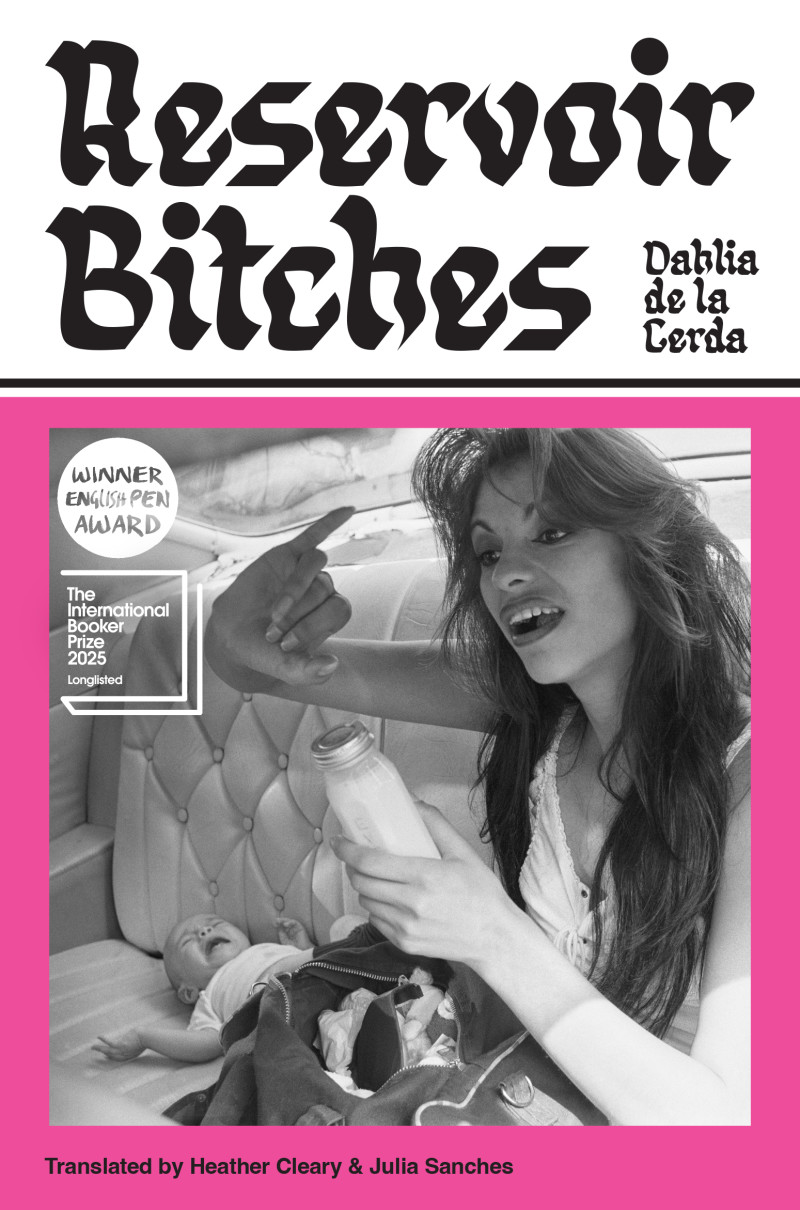
‘La Huesera’ is from Dahlia de la Cerda’s debut collection Reservoir Bitches (translated by Julia Sanches, Heather Cleary), which won an English PEN Award and was Longlisted for the International Booker Prize 2025. It is a power-packed eight-part story in which a young woman is writing a letter to herself, attempting to deal with her grief and to direct her anger over the brutal death of one of her girlfriends. In the process, we learn some startling realities about femicide in Mexico and how Mexican women survive, hit back, get assaulted or killed, in a world rife with danger. The narrator says ten women in Mexico are murdered every day, which is one every three hours. ‘What were we doing while other women were being raped, beaten to death and dismembered?’ / ‘An unidentified woman. You were one more body in this genocide.’ She also says, ‘Mexico is a monster that devours women.’ / ‘Cities covered with pink crosses. Cities covered with posters of missing women. Deserts of bone.’
La Huesera, we learn, is an old woman who collects the bones of wolves, lights a fire and sings the bones back into being. As the wolf runs off down the street, it transforms into a woman who is laughing and free. Read the story (and the collection) to see why de la Cerda is being hailed as a new and invigorating force in Mexican literature. Here are some quotes …
‘There is no room of one’s own when men think our bodies belong to them.’
‘What I didn’t keep was the promise I made to you: that I wouldn’t let myself drown in my sadness if something happened to you. But too late, I already did. I’m in it so deep that sometimes I even think I am sadness. You’ll be happy to know I got a tattoo on my arm in your honour and mine: sadness is rebellion.’
‘Bunker’ by Josephine Rowe
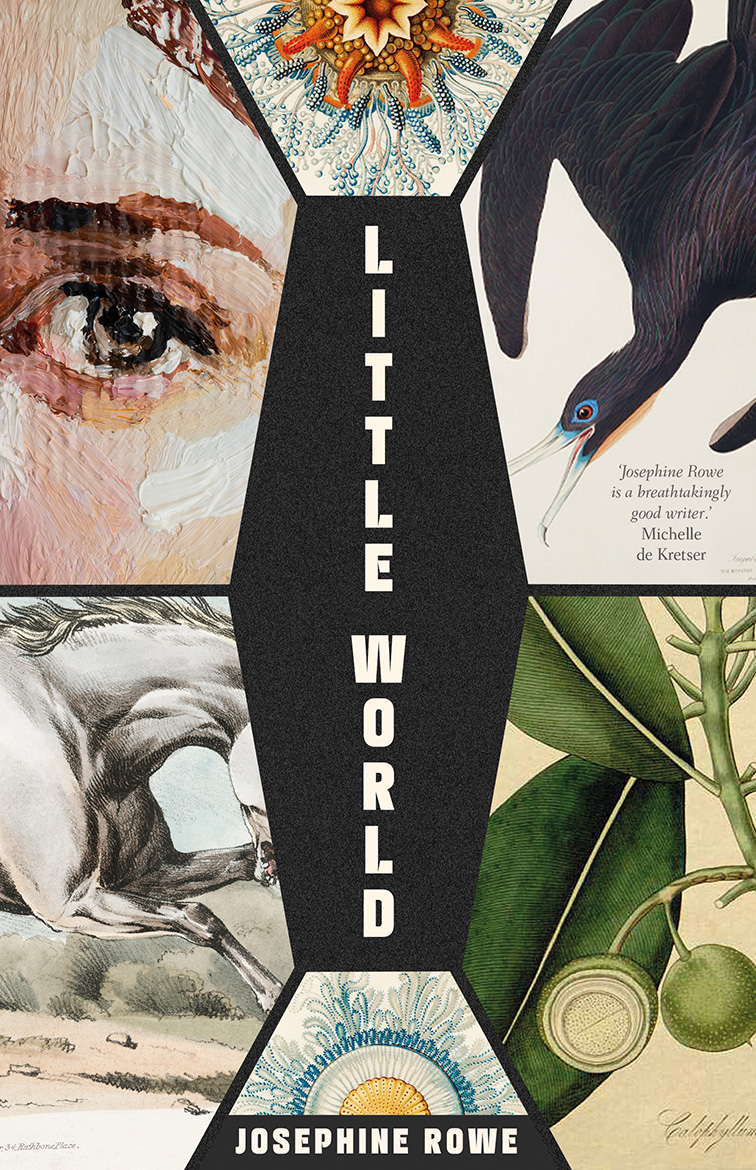
‘Bunker’ was a short story in its own right before it was revised and incorporated into Josephine Rowe’s latest book Little World: A Novel, which reads like four interconnected stories reminiscent of the structure of Elizabeth Strout’s Olive Kitteridge. It is a wise and winsome story about a feisty woman called Tilde who winds up in the kind of Aussie backwater that attracts all sorts of end times characters. Her van is on its last legs when she arrives in the ’70s, and she buries the horse float the van has been lugging along in the ground to use as a bunker when the apocalypse comes. Earlier in her travels, she has rescued the statue of a saint from an outback humpy and her care for the dead girl may have hallowed some of her endeavours. Tilde has lived in a train carriage in a clearing amid a grove of trees she planted from a handful of seed scattered decades ago. Now she’s unwell (was found reciting something by a bowser) and in St Elizabeth’s where ‘no-one but family can get at her, and she has no family that we know of’. Her neighbour Syb is keeping an eye on the place in her absence. There’s some intricate and poetic writing that pulls the reader into this strange and striking world and entices us to empathise with its inhabitants, especially Tilde. Here’s a quote …
‘You might go out at 3am to stalk off a bad dream or an argument or just to shake some dark spell, and a light would be burning through the trees, the carriage glowing like an oversized Christmas ornament, and no chance she’d be wasting the genny just for a night-light. All the blinds would be up and she’d either be straight-backed at the kitchen table or upright and in motion, a shadow flowing back and forth across the lit row of windows, poring over one of those magazines, her mind drip-fed by subscription.’
Josephine Rowe is the author of three story collections and two novels, including A Loving, Faithful Animal, longlisted for the 2017 Miles Franklin Award and selected as a New York Times Editors’ Choice. She has twice been named a Sydney Morning Herald Best Young Australian Novelist, and Here Until August was shortlisted for the 2020 Stella Prize. She currently lives in coastal Victoria.
‘Only Goodness’ by Jhumpa Lahiri
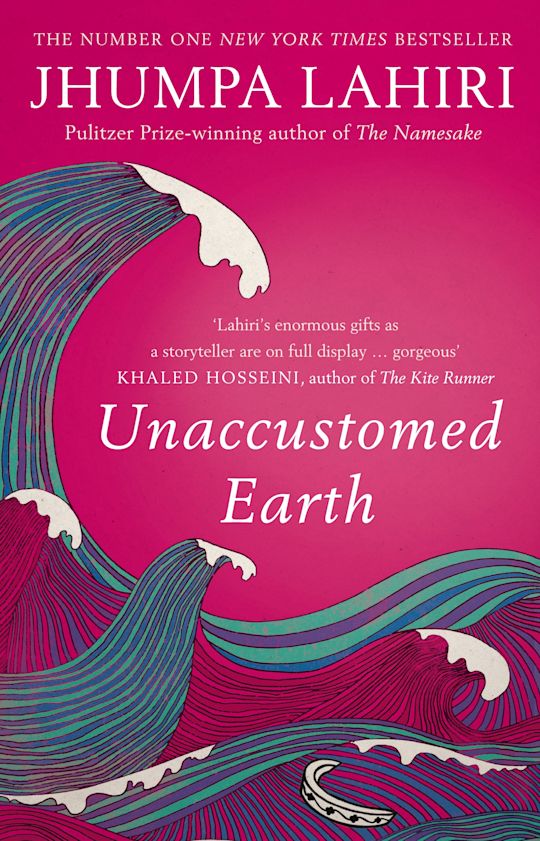
‘Only Goodness’ is from Jhumpa Lahiri’s marvellous collection of stories, Unaccustomed Earth, which received the 2008 Frank O’Connor International Short Story Award (the world’s largest prize for a short story collection) and was a finalist for the Story Prize. Sudha and her brother Rahul have a shaky bond that is fractured when he comes to visit her and her family in London. He claims he has changed since Sudha had introduced him to alcohol when he was in junior high and went to visit her at Penn and he’d taken to it instantly and assiduously. In London, he tells Suddha that his new addiction is to run every day. He also reminds her that he is now a parent to his girlfriend’s daughter. In the background, always looming, are their problematic parents, easy to upset or be upset by. As Sudha says of her father: ‘He never let his children forget that there had been no one to help him as he helped them, so that no matter how well Sudha did, she felt that her good fortune had been handed to her, not earned.’ Here’s a quote …
‘And yet she could not forgive herself. Even as an adult, she wished only that she could go back and change things: the ungainly things she’d worn, the insecurity she’d felt, all the innocent mistakes she’d made.’
Jhumpa Lahiri is a bilingual writer and translator, is the Millicent C. McIntosh Professor of English and Director of Creative Writing at Barnard College, Columbia University. She received the Pulitzer Prize in 2000 for Interpreter of Maladies and is also the author of The Namesake, Unaccustomed Earth, and The Lowland. Since 2015, Lahiri has been writing fiction, essays, and poetry in Italian: In Altre Parole (In Other Words), Il Vestito dei libri (The Clothing of Books), Dove mi trovo (self-translated as Whereabouts), Il quaderno di Nerina, and Racconti romani. She received the National Humanities Medal from President Barack Obama in 2014, and in 2019 was named Commendatore of the Italian Republic by President Sergio Mattarella. Her most recent book in English, Translating Myself and Others, was a finalist for the PEN/Diamonstein-Spielvogel Award for the Art of the Essay.
‘The Particles of Order’ by Yiyun Li
This resonant story features a conversation between two women: Lilian Pang, an author from New Jersey, and Ursula Burnett, who had been the typist for the famous (now deceased) author Edmund Thornton. Guests come to stay at Thornton’s house, which Ursula manages, thinking they will find traces of the author in the house. Lilian’s different. She wants solitude, to read Euclid, and a change of scene to help her grieve the suicide of her two sons. Li has lost two children to suicide and has since written three short stories published in The New Yorker that feature Lilian: ‘I gave Lilian my life,’ she says, ‘but Lilian is not me’. While Edmund’s death has been very public, Ursula’s grief over losing him has remained a quiet affair. In contrast, Lilian has been hounded by strangers who write to her about their own misery. Also ‘journalists create a dramatic woman writer who suffered tragic losses as clickbait’. Ursula and Lilian’s conversation affirms their understanding that being allowed to sit with their grief will help them find a way through it. Here’s a quote …
‘Comforting? Ursula thought of the years she’d spent as Edmund’s typist – nearly half her life. All that time, however, could easily be condensed into a single image in a William Trevor story, no more than two or three sentences. A woman walks alone by the sea. A man, whom she has not stopped loving, lives without returning her love and then dies without thinking of her. “I suppose very few people in William Trevor’s work get themselves murdered, if that’s what you mean by “comforting”.’
‘A Thousand Years of Good Prayers’ by Yiyun Li
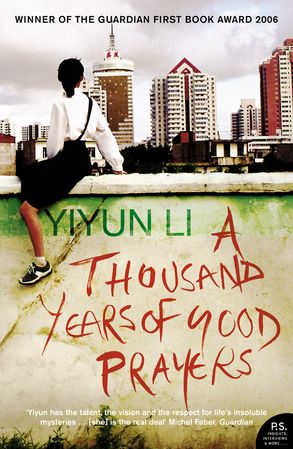
Yiyun Li’s A Thousand Years of Good Prayers is a widely acclaimed collection of short stories published in 2005. The title story is my favourite, and features Mr Shi, a retired scientist from Beijing, who visits his divorced daughter, Yilan, in the US. Mr Shi is devastated to learn of his daughter’s divorce and is keen to try to get her to act more like a woman who will attract another man to marry her. When she reveals that the breakup was of her own making, he is shocked. Their conversations are mostly stilted – due to their cultural and generational differences – but Mr Shin’s daughter has learned to speak up for herself by learning English and she reveals some home truths which mean her father must admit to his own cover ups. He divulges everything to an Iranian woman he meets in the park whom he considers to be a friend, and we can’t help but feel for him. Mr Shin shares a Chinese proverb with her that claims it takes 300 years to forge a truly understanding relationship, and he adds that for a father and daughter this sympathy could take as long as 1,000 years to develop. Here’s a quote …
‘But isn’t it what you meant? We didn’t do a good job bringing you up in Chinese so you decided to find a new language and a new lover when you couldn’t talk to your husband honestly about your marriage.’
Yiyun Li is the author of six works of fiction – Must I Go, Where Reasons End, Kinder Than Solitude, A Thousand Years of Good Prayers, The Vagrants, and Gold Boy, Emerald Girl – and the memoir Dear Friend, from My Life I Write to You in Your Life. She is the recipient of many awards, including a PEN/Hemingway Award, a PEN/Jean Stein Book Award, a MacArthur Foundation fellowship, and a Windham-Campbell Prize, and was featured in The New Yorker’s 20 Under 40 fiction issue. Her work has appeared in The New Yorker, A Public Space, The Best American Short Stories, and The O. Henry Prize Stories, among other publications. She teaches at Princeton University and lives in Princeton, New Jersey.
‘Shifting Occupancies’ by Corinna Vallianatos
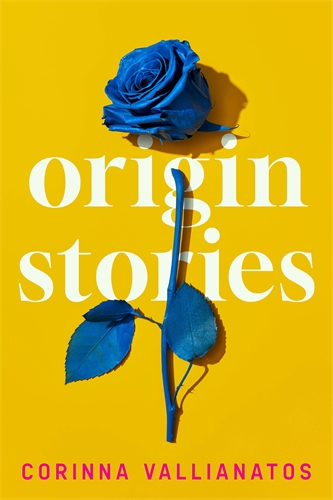
In this breathtakingly good story from Vallianatos’s collection Origin Stories, Laurel and Seth are on separate solitary writing retreats – a trip they take each year. Laurel is at a hotel with a pool and spa, and Seth is at a house he’s rented in Joshua Tree. Neither of them is warm enough. They’ve been married for eight years, and there is a restlessness bubbling away, but they find it difficult to express exactly what it is they’re searching for. As author Jessica Anthony says, ‘we learn the solitude is meant to operate like imaginative fuel’ for the couple. Both are distracted by other people, and we’re prompted to ponder whether this will kickstart their creativity and keep their marriage humming along on steady (if somewhat disparate) tracks or have the opposite effect. Here’s a quote …
‘She cast off her shirt and hoisted her breasts out of her bra. Her nipples were like the soft eyes of a drunk.’
Corinna Vallianatos is Associate Professor of Practice in Creative Writing and the faculty advisor for Meridian at the University of Virginia. She is the author of the novel The Beforeland, and two collections of stories, My Escapee, winner of the Grace Paley Prize for Short Fiction and a New York Times Book Review Editors’ Choice, and Origin Stories, described by the New York Times as ‘shrewd meditations on ambition, shame, artistic boundaries and more’. Her stories have appeared in The Best American Short Stories, BOMB, McSweeney’s, A Public Space, LitMag, and elsewhere, and she’s a MacDowell and Bread Loaf Writers’ Conference Fellow. She received her undergraduate degree from the University of Virginia, her MFA from the University of Arizona, and has taught in the University of Tampa’s low-residency MFA program and at Claremont McKenna College.
‘Walking Ghosts’ by Mary O’Donnell
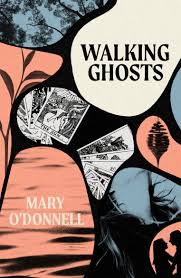
In ‘Walking Ghosts’ the loss of Jane’s mother leads her into a land transaction to sell the family farm. The sale will undoubtedly benefit her financially, but it will also make it harder for a poor farmer who has eked out his living subletting the land. Jane realises she is being ruthless and perhaps not acting as her farmer father would have acted in the circumstances. Will she be ruled by compassion? Shame? Or the need to move on and fully commit to her urban life as an architect in another town? It’s a shifting world of possibilities and we wonder, once she has made her decision, who she will become. Here’s a quote …
‘One Friday, they met in the café of a general hardware store. It was full of timber-faced women leaning in closely together, some of them masked, others not.’
Mary O’Donnell is an acclaimed Irish poet and fiction writer, recognised for her role in expanding Ireland’s literary landscape. She has published eight poetry collections, including Unlegendary Heroes and Massacre of the Birds, as well as several novels. O’Donnell’s work has been translated into multiple languages. She has co-edited an anthology of Galician women’s poetry and won the Fish International Short Story Prize. O’Donnell’s literary achievements include winning the An Post/Irish Book Award in 2023 for her poem ‘Vectors in Kabul. O’Donnell has held writing residencies internationally and taught creative writing at university level. A member of Aosdána since 2001, she is an influential figure in Irish literature and has served on various literary adjudication panel
‘A Perfect Pair’ by Julia Strayer

‘A Perfect Pair’ is a beautifully conceived piece of microfiction that depicts the scratchiness of married life. The husband is super enthusiastic about starting a business that pairs a laundromat with a bowling alley. The wife can see all the pitfalls – like ‘drunk men, their heads inside dryer drums practicing Tarzan screams with some woman’s clean underwear taking the brunt of it.’ Here’s a quote …
‘I spit toothpaste into the sink and stare daggers at him in the mirror. “People who like laundromats aren’t the kind of people willing to wear shoes other people’s feet have sweated in.”
“Not everyone is like you. Some people are fun.”’
Julia Strayer has stories in Glimmer Train, Kenyon Review Online, SmokeLong Quarterly, The Cincinnati Review, Jellyfish Review, Wigleaf, Atticus Review, and others, including The Wigleaf Top 50 and The Best Small Fictions. ‘A Perfect Pair’ was published by Fractured lit in June 2025. She teaches creative writing at New York University.


Recent Comments