Eleven stories that sketched their way across my heart in the first half of 2025.
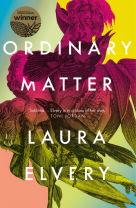
‘Grand Canyon’ by Laura Elvery
‘Grand Canyon’ is from Laura Elvery’s Ordinary Matter, her second collection – a suite of 20 stories inspired by women honoured with Nobel Prizes for their scientific research. Marie Curie won the prize twice. In ‘Grand Canyon’, Madame Curie and her daughters Eve and Irene are visiting America and local yokel Frank Wagner (24) has the job of watching out for them and showing them around. Frank is attracted to Eve, who is just 16. When she speaks French, he says, it is like ‘a vast and perfect galaxy’, ‘a bowl of strawberries and cream’. He finds Irene ‘a bit wonky-looking’ and Madame Curie, ‘brittle and intimidating but also extraordinary’. When Frank takes the Curies to ‘his first Indian reservation’ he is affronted that ‘the Indian kids are running around like nothing exciting is going on at all – do they not care about French people? Or about how many tonnes of pitchblende the girls’ mother sifted through to find smidgens of radium?’ The story perfectly captures the atmosphere of the period: the wealth and power of dynasties involved in industries like steel, rail, oil and dynamite, the fascination with scientific exploration, and the differences between Europeans and Americans. At the Grand Canyon, we get a hint that Curie’s groundbreaking work with radium is making her sick. Here’s a quote …
‘Madame has fallen onto her side, her black dress trapped under her like a terrible wave. He catches sight of her white face. Her eyes are closed, her mouth is slack. What is going through her mind, so far from home?’
Laura Elvery is the author of Trick of the Light and Ordinary Matter, which won the 2021 Steele Rudd Award for a Short Story Collection and was shortlisted for the Queensland Premier’s Award for a Work of State Significance and the 2022 Barbara Jefferis Award. Her work has been published in numerous literary journals and she has won the Josephine Ulrick Prize for Literature, the Margaret River Short Story Competition, the Neilma Sidney Short Story Prize and the Fair Australia Prize for Fiction. Nightingale is her first novel and it won the People’s Choice Queensland Book of the Year in 2025. She lives in Brisbane.
‘Once the Shore’ by Paul Yoon
 The dream-like setting and mysterious tone of this story is perfect for this tale about a young waiter and an American widow who are both dealing with loss. The waiter’s loss: a brother drowned at sea. The widow’s: a husband departed. The story shows how losing someone can hit home in stages and that these waves of grief can even occur while the person is still alive. We see how relationships and the stories we tell about them evolve, making losses inevitable. Memories can seem like shifting sands or serve as a salve or life raft. Here are some quotes:
‘She went on: “To wait. It is a fever. And I waited for him. But the man whom I knew, he never came. So I want to remember him. Not the one who returned. But the one who never left.”’
‘When his scent was of soap. When he would have done such an act as pick up a stone and write their initials in the mouth of a cave. Caged in the loose sketching of a heart.’
Paul Yoon is the author of four previous works of fiction: Once the Shore, which was a New York Times Notable Book; Snow Hunters, which won the Young Lions Fiction Award; The Mountain, which was an NPR Best Book of the Year; and Run Me to Earth, which was one of Time’s Must-Read Books of 2020 and longlisted for the Andrew Carnegie Medal for Excellence in Fiction. A recipient of a Guggenheim Fellowship, he lives in the Hudson Valley, New York.
‘A Little Burst’ by Elizabeth Strout
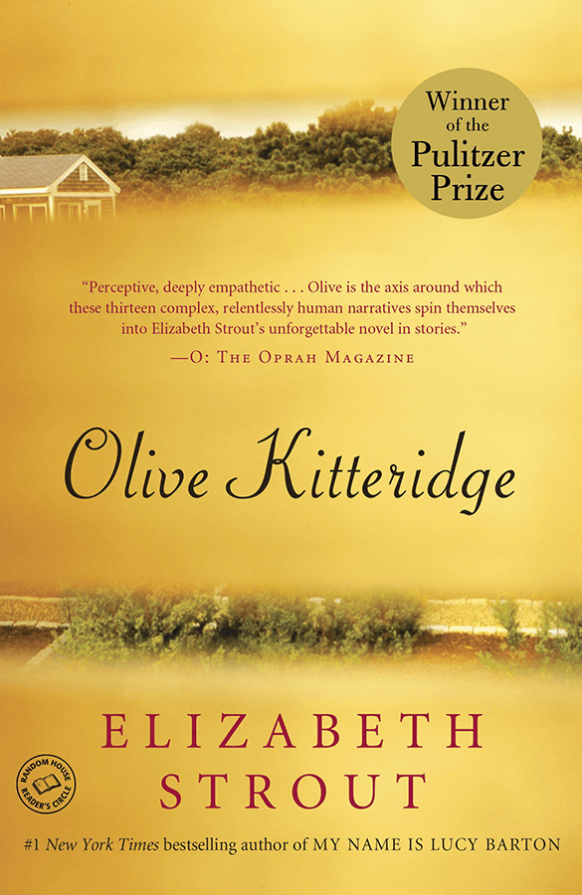 I attended a course on short story fundamentals with the ASA in December 2024, and the story we analysed was ‘A Little Burst’ by Elizabeth Strout from Olive Kitteridge. What a gem. At her son’s wedding: ‘All afternoon Olive has been fighting the sensation of moving underwater – a panicky, dismal feeling, since she has somehow never managed to learn to swim.’ Olive steals and rearranges a few of her new daughter-in-law’s possessions – revenge for mockery of the dress she has made specially for the event and for presuming to know Olive’s son as well or better than she does. My heart breaks for Olive because she is lonely, beset by her own frailties, and apprehensive about her son’s future. She is also searingly perceptive and melodramatic. Here’s a quote:
‘Anyway, the day is almost over. Olive stares up at the skylight over the bed and reassures herself that she has, apparently, lived through it. She pictured herself having another heart attack on the day of her son’s wedding: She would be sitting on her folding chair on the lawn, exposed to everyone, and after her son said, “I do,” she would silently, awkwardly fall over dead, with her face pressed into the grass and her big hind end with the gauzy geranium print stuck up in the air. People would talk about it for days to come.’
‘Hard Water’ by Raven Leilani
 Edie is a 23-year-old Black woman who gets a job as a submarine librarian for the US Department of Defense at its Bethesda base. As she works on the catalogue, she learns a few facts, like ‘the difference between infrasonic and ultrasonic frequencies – one a lank delta wave and the other a ragged cosine – and the difference between active and passive sonar, which was technically the difference between a mouth and an ear.’ She is also attracted to her supervisor, Alex, who is Black, too, and has a prosthetic leg. Despite really needing the job, Edie flouts the rules and takes several things home. Is she committing a serious offence like treason? Is she putting herself and others at risk? Edie is intrigued by the submarines, and the scene where she is being submerged in a Triton 3600 with Alex is tightly woven and oppressive. The ending is also marvellously mysterious.
‘“I need this job,” she answered, sliding the ticket into her purse. But this was nothing new. Her life had been shaped principally by need. The want had been used early and frivolously, on a tongue piercing that became so infected that she could no longer roll her rs, on a string of druggy, sanguine white boys, and in undergrad, on a post-modern exploration of the villanelle. Now, she could not afford to have principles. She could not afford shampoo. “And because I love my country.”’
Raven Leilani is an American writer whose debut novel Luster was released in 2020 to critical acclaim. ‘Hard Water’ was published in 2016 in Cosmonauts Avenue.
‘Ghost Kitchen’ by Ross Raisin
 This broody story is about the underground Fast Food industry and how it treats its employees; especially immigrants who need the work and will do it despite being abused on the job, which includes lower pay packets and cruel jibing. Sean lands in the industry after a tragedy, which has left him numb. His two ‘underground’ jobs are working at the fryer or ‘the pod’ (as the workers call the isolated units they toil in) and cycling take-out orders around the city. Working two jobs makes him a ‘sucker for punishment’ he tells his co-worker Ebdo.
The story reveals that ghost kitchens, or dark kitchens, are ‘so-called in part because they have no windows, no way for anybody on the outside to see in’; and they are ‘often on the outskirts of urban areas’; ‘concealed islands that sometimes create the conditions for darkness to flourish.’ Raisin has done a great job of weaving a compelling story that raises an important societal issue and also evokes our empathy for people doing it tough. Here’s a quote:
‘He could piece together only fragments: Mehmet and Dougie running away into the night, the boiled banknotes lying on the floor like damp flowerheads, the shock of new pain when Ebdo had slowly wrapped his hand with cling film. Ebdo, sitting on the ground beside him, had heard the siren too.’
Ross Raisin was born and brought up on Silsden Moor in West Yorkshire. He is the author of four novels: A Hunger (2022), A Natural (2017), Waterline (2011) and God’s Own Country (2008). His work has won and been shortlisted for over ten literary awards. Ross has written short stories for Granta, Prospect, the Sunday Times, Esquire, BBC Radio 3 and 4, among others, and in 2018 published a book for the Read This series, on the practice of fiction writing: Read This if you Want to be a Great Writer. He lives in York with his wife and two children.
‘Roy’ by Emma Binder
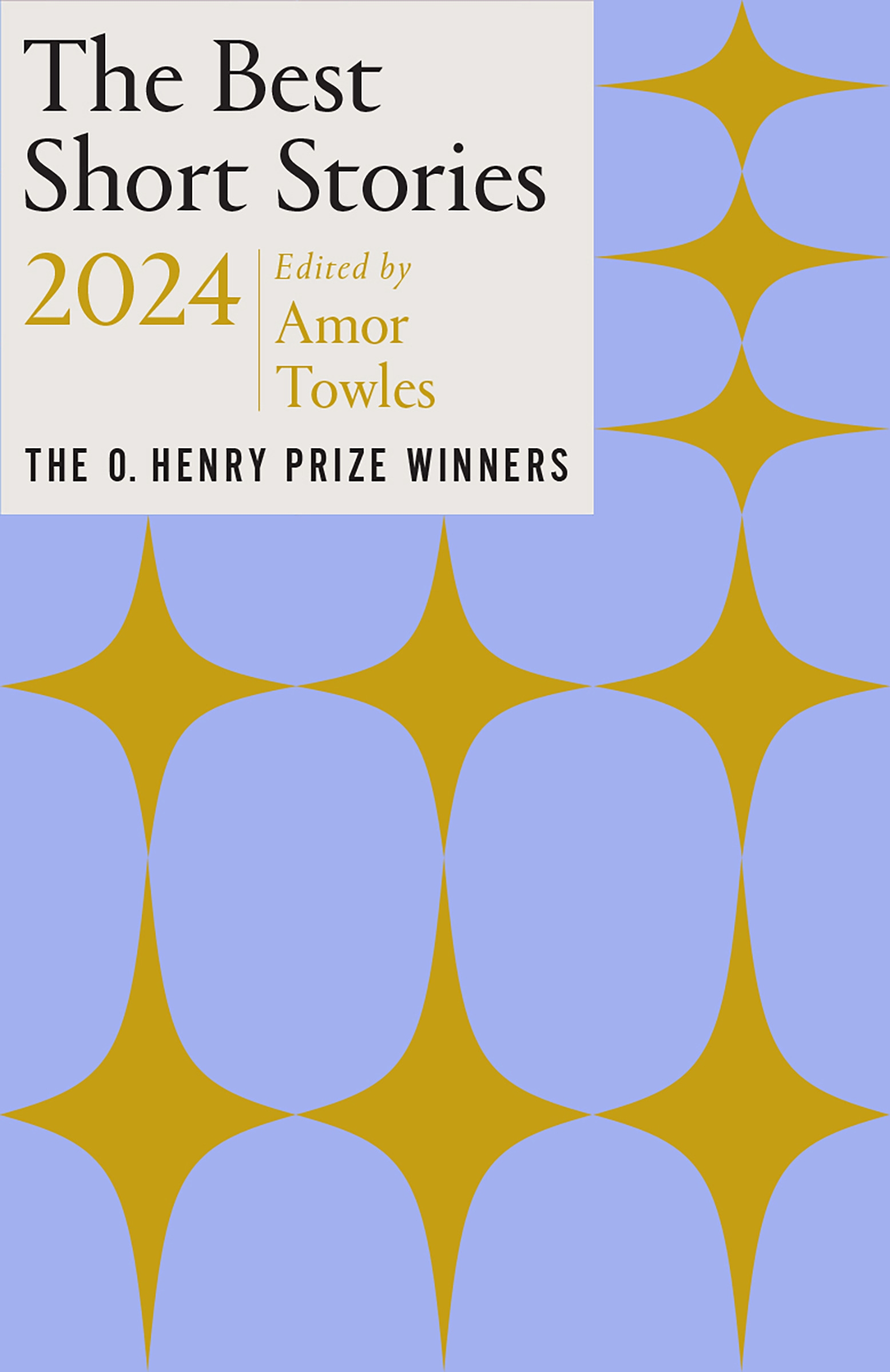 Great setting. Great characters. Great evolution of the main character, Sophie, niece of Roy who says she’s ‘the tough guy’ to her younger sister’s ‘princess’. Roy has been asked to look after his nieces while their mother and father go to be with their grandmother while she is dying. Roy is the brother of the girls’ dad. He is a drinker, a gambler, a womaniser, and ‘a purveyor of what other, lesser men call trash’. He is also a hunter and a romantic, describing his love for the girls’ mother (whom he declares he once made love with) beautifully: ‘I’ve got a porch around my heart for that woman, to this day.’ Roy’s rough and tumble ways of being and his down-to-earth companionship frees Sophie to grow wilder and stronger – to become more fully what she really needs and wants to be. This runs contrary to what she encounters in her fledgling friendship with some local girls, which goes nowhere after the girlish clothes they make her try on don’t really fit. This unusual and superbly rendered coming of age story is from The Best Short Stories 2024: The O. Henry Prize Winners, chosen by guest editor Amor Towles and series editor Jenny Minton Quigley. Here are some quotes:
‘A violet scar stretched from his temple to his chin, cleaving his face like a crack in a vase. He looked at us and grinned. A tooth was missing from either side of his mouth.
“My nieces,” he said. “In living color. You two look just like your mom.”’
‘Behind them on the road, I tried to pedal faster, focusing only on the crunch of my tires against gravel and the steady pulse of my heart. Ahead of me, Natalie and Lauren erupted in laughter, like two roses blooming at the same time.’
‘The room was thick with light. There was a spark growing inside me, calling me into a different future, like a train hurtling fast into the wilderness.’
Emma Binder is a writer from Wisconsin and a 2023-2025 Stegner Fellow in fiction at Stanford University. They earned their MFA in Fiction from the University of Wisconsin-Madison, and have received support from the Elizabeth George Foundation, the Wisconsin Institute for Creative Writing, Vermont Studio Center, and Writing By Writers. They received an O. Henry Prize, the Indiana Review Fiction Prize, the Gulf Coast Prize in Fiction, and a Wisconsin Writers Award. Their short stories have appeared or are forthcoming in The Best American Short Stories, The Kenyon Review, Michigan Quarterly Review, Electric Literature’s Recommended Reading, and elsewhere. Currently based in Oakland, they are working on a novel.
‘Spillway’ by Djuna Barnes
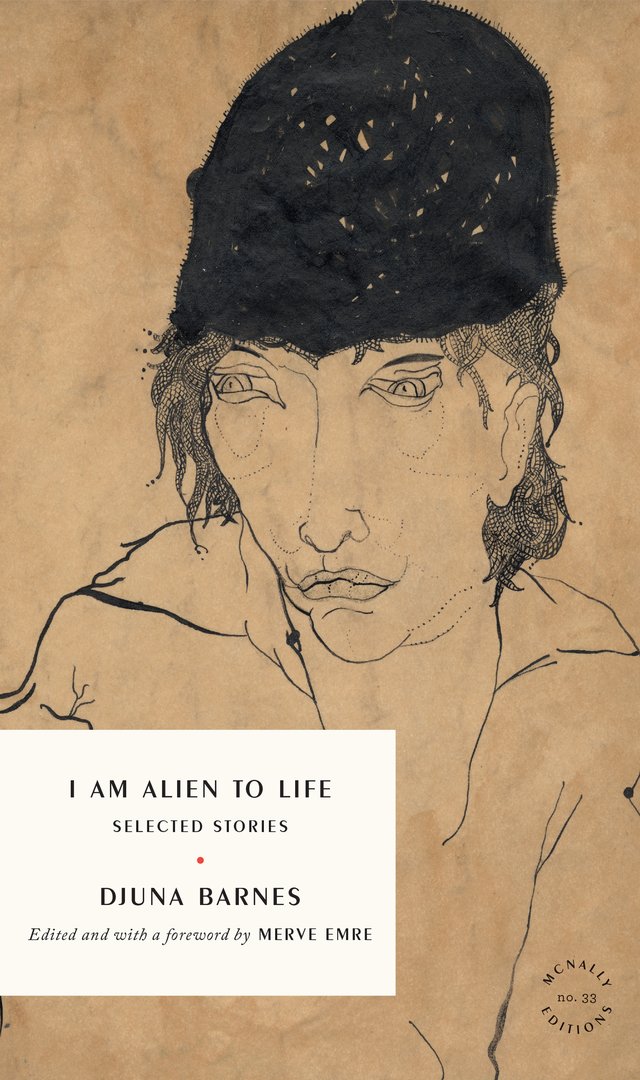 As the Telegraph UK puts it the newly published collection of Djuna Barnes’s short fiction, I Am Alien to Life, stars ‘rotting corpses, grieving loners and men with whips’. ‘Spillway’ features Mrs Julie Anspacher who has returned from the sanatorium where she has had a lengthy stay due to her tuberculosis. She brings her dying child conceived with a now-dead lover home with her and tries to explain to her husband why she has done this. She also tries to talk with him about her misery – but he remains baffled and aggrieved. The story has a dramatic and uncertain ending. We fear the worst because Julie has been tormented, ‘suffering without a consummation, it’s like insufficient sleep; it’s like anything that is without proportion’. She says she wants to feel what she should feel but she’s ‘stood so much for so long she is worn down by the interminable discipline of learning to stand everything’. Like many of Barnes’ stories, this one’s bleak and probes the human condition in its alienation and absurdity. Here are some quotes:
‘Darkness was closing in, it was eating away the bushes and the barn, and it rolled in the odours of the orchard.’
‘… torment should have some meaning. I did not want to go beyond you, or to have anything beyond you – that was not the idea at all. I thought there was to be no more me. I wanted to leave nothing behind but you, only you. You must believe this or I can’t bear it …’
Djuna Barnes (1892-198) was born on Storm King Mountain in New York State. She worked as a journalist during World War I before leaving the United States to spend the inter-war years in Paris and London among the most celebrated writers nd artists of the twentieth century. She returned to New York in 1941 and lived in Grenwich village until her death. She published three novels as well as short fiction, nonfiction, poetry, skits, and a three-act play between 1914 and 1950. She had a brief and tragic romance with journalist Mary Pyne, who died of tuberculosis in 1919, attended to by Barnes until the end.
‘The Wavemaker Falters’ by George Saunders
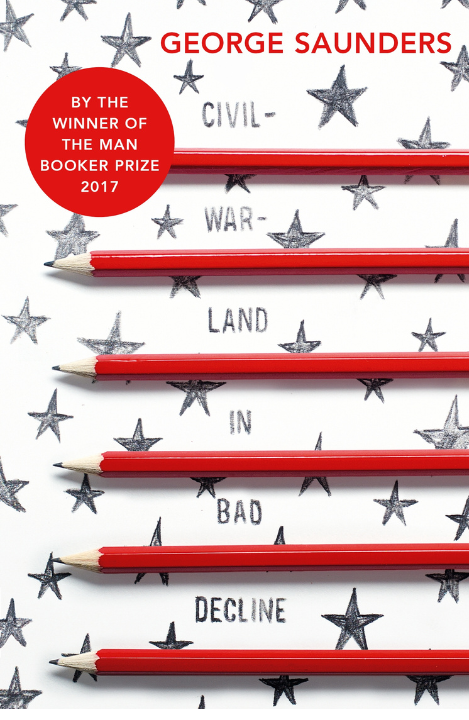 Saunders is masterful at writing about sad men who spiral into decline in the arms of destiny. ‘Nothing’s gone right for me since the day I crushed the boy with the wavemaker,’ says the protagonist in ‘The Wavemaker Falters’ – and yes, things only get worse for him as he lives with the guilt of the accident and the pall it casts over his capacity to work and be present in his romantic relationship. Saunders’ superpower here is to enable us to empathise with the man and, by the end of the story, we join him in his plea of ‘enough already’. CivilWarLand in Bad Decline (which features ‘The Wavemaker Falters’) was Saunders’ first short story collection, and I agree with his publisher who says, Saunders’ ‘vision of our near future is as black and funny as you can get’. (And I’d add excruciatingly sad, sometimes, too.)
‘Simone sleeps through the whole thing, making little puppy sounds and pushing her rear against my front to remind me even in her sleep how long its been. But you try it. You kill a nice little kid via neglect and then enjoy having sex. If you can do it you’re demented.’
George Saunders was born in 1958 in Texas and trained as a geophysical engineer. In 1988, he obtained an MA in creative writing from Syracuse University and went on to teach on the MFA program. His works comprise several collections of short stories, including Tenth of December (2013) and Liberation (2022), a novella, The Brief and Frightening Reign of Phil (2005), and several novels, including Lincoln in the Bardo, which won the 2017 Man Booker Prize for best work of fiction in English. In 2006 Saunders was awarded a MacArthur Foundation Fellowship and a Guggenheim Fellowship. In 2009 he received an Academy Award from the American Academy of Arts and Letters. He lives in Rochester, US, with his wife and children.
‘Cello’ by Andrew Porter
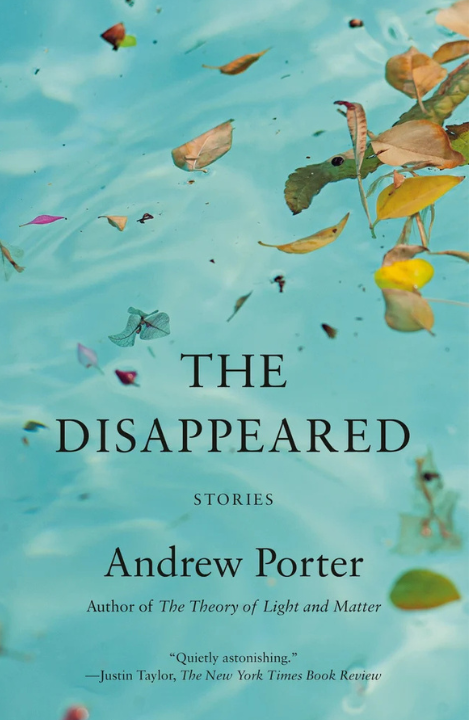 ‘Cello’ is the moving story of how Natalie and her husband David are bearing the load of a recently diagnosed neurological disorder which is robbing Natalie of her fine motor coordination and concentration. David clings to the specialist’s words about it being too early for an accurate diagnosis but it soon becomes clear Natalie will not be able to continue with her very accomplished quartet or with her tenure as a music professor. Her studio is a glass cube in the backyard, which gives David the chance to see her movements. It also underscores her separateness. He wants to reach her in their shared grief – but the way to do this is not clear to him. There are many stories of loss (literal and figurative) in The Disappeared by Andrew Porter, whose first collection The Theory of Light and Matter has long been a favourite of mine. It also did not surprise me to learn that Porter admires the stories of Manuel Muñoz as both authors share a gift for creating melancholic atmospheres that linger long after the finer details of their stories have evaporated. In the case of The Disappeared, Porter said he tried to put a lot of details into the stories that he associated with the atmosphere of San Antonio and Austin, some of which are no more.
‘I remember watching the way her bow moved, so fluidly, as if it were an extension of her body, a part of her arm, and the way she closed her eyes at certain points in the performance and seemed to disappear within herself, the way her breathing sped up and then slowed down as the tempo increased or fell off, and the way she seemed to brighten at certain moments, as if awakened from a dream or a trance. It was all very intimate and hypnotic and I found it hard to look away from her, hard not to stare at her, even as the performance was ending.’
Andrew Porter is the author of the story collection The Theory of Light and Matter and the novel In Between Days. A graduate of the Iowa Writers’ Workshop, he has received a Pushcart Prize, a James Michener/Copernicus Fellowship, and the Flannery O’Connor Award for Short Fiction. His work has appeared in One Story, The Threepenny Review, Ploughshares, Narrative, The Southern Review, and on Public Radio’s Selected Shorts. He teaches at Trinity University in San Antonio, Texas.
‘Follow-up’ by Curtis Sittenfeld
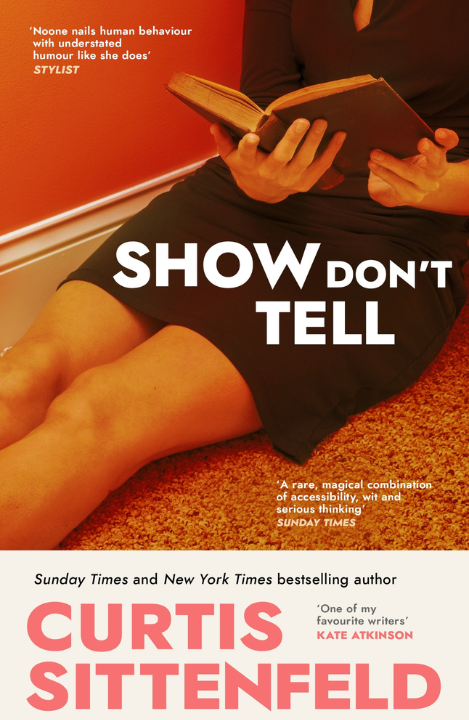 Janie is anxiously waiting for the results of a breast biopsy, and we soon learn that ‘because low-level dread is often inside Janie, the first thing she thinks is, Ah, yes, the notification of my premature death – I was expecting you.’ Janie uses the waiting time to reflect on her life choices, to take stock: She can (and does) tell her friend Pippa anything and their exchanges are intimate, but her long marriage has worn down her capacity to communicate deeply with David her husband. ‘She prepares her face for him’ and, even readied like this, she still can’t tell him her health worries. What if she’d further pursued the fling she’d with a warm and wonderful barista just before she married David? Would she feel more fulfilled? It’s a moot question because she has a strong and irreplaceable bond with Evan, Janie and David’s child. At one point Janie says to David, ‘If you want to know what it means when Evan wears pearl earrings, ask him.’ ‘Follow-up’ is one of the many great stories in Sittenfeld’s collection Show Don’t Tell. Here are some quotes:
‘“Salami smells like armpits,” Evan says. “In a good or bad way?” Janie asks, and it works – Evan laughs.’
‘Or perhaps it’s a story about how precious it is to deeply adore two people in the world, even if neither of them is your spouse, and to share part of every day with them? Isn’t this, after all, two more people than anyone is guaranteed?’
Curtis Sittenfeld is the bestselling author of seven novels, stories and non-fiction. Her books have been selected by The New York Times, Time, Entertainment Weekly, and People for their “Ten Best Books of the Year” lists, optioned for television and film, and translated into thirty languages. Her short stories have appeared in The New Yorker, The Washington Post, and Esquire, and in the Best American Short Stories anthology, of which she was the 2020 guest editor.
‘Chugger’ by Emma Darragh
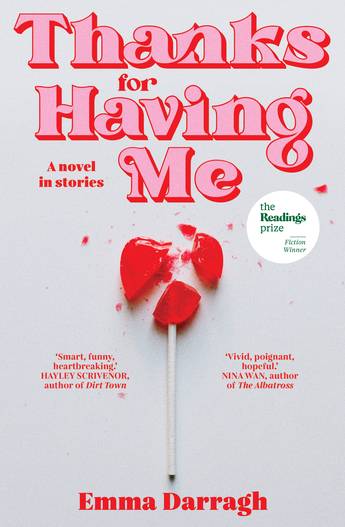 ‘Chugger’ is from Emma Darragh’s debut collection Thanks for Having Me. It is set in a Wollongong shopping centre and features Vivian, a woman so stressed and time poor, she cannot stand the fact that the charity collectors (chuggers) are trying to do their (irritating) job and converse with her. She wants to tell them to f*&^ off but the guy in front of her has done this. She’s trapped. Instead, when the chugger asks if she cares about animals she says, ‘No, not really,’ and pushes past. Vivian is doing some grocery shopping for her young daughter Evie who is coming to stay the next day. She doesn’t have enough money to pay for all the items, so she takes several out, pays and leaves the shop. The chugger gets her again – and it’s here that the story gets wilder (no spoilers here, you’ll have to read it yourself). Here are some quotes:
‘…Vivian knows she keeps letting Evie down, in the smallest of ways, and can’t seem to help it.’
‘There she is. But it isn’t really her – it can’t be. It’s not her face. No, it’s a mask – a white mask, the kind of cheap white mask actors wear. Her features are hard and her lips are a colourless line. Her eyes look more like eyeholes than actual eyes.’
Emma Darragh lives and works in Wollongong. She holds a PhD in Creative Writing from the University of Wollongong. Her writing has appeared in numerous Australian publications, including Cordite, Westerly, Meniscus, TEXT, The Suburban Review, Swim Meet Lit Mag, and The Big Issue Fiction Edition. Her PhD, ‘The Short Story Cycle in the Twenty-First Century’, was awarded with Examiners’ Commendation for Outstanding Thesis. Emma’s debut novel-in-stories, Thanks for Having Me, was the winner of the 2024 Readings New Australian Fiction Prize.


Recent Comments