‘It’s this line / here’ … that’s a quote from James Schuyler (see ‘The Bluet’ below). It’s this line (or two) here that I’ve chosen from the poems I loved most during the first half of 2026 … So, read on!
‘I Will Always Love You’ by Frank O’Hara
while I sought your face / to be familiar in the blueness // or to follow your sharp whistle / around a corner into my light // that was love growing fainter / each time you failed to appear //
Francis Russell ‘Frank’ O’Hara (March 27, 1926 – July 25, 1966) was an American writer, poet, and art critic. A curator at the Museum of Modern Art, O’Hara became prominent in New York City’s art world. O’Hara is regarded as a leading figure in the New York School, an informal group of artists, writers, and musicians who drew inspiration from jazz, surrealism, abstract expressionism, action painting, and contemporary avant-garde art movements. Before he died at age 40, he had published six poetry collections, and his work and life has since been written about extensively.
‘Fire Season: Super Perennial’ by Jacqueline Lyons
In one dream, a rain shower in every room, matchbook rolled / into the hem of a yellow dress / fountain tumbling with smoke instead of water
Jacqueline Lyons is the author of poetry collections Adorable Airport (Barrow Street Press), The Way They Say Yes Here (Hanging Loose Press), and poetry chapbooks Earthquake Daily (New Michigan Press), and Lost Colony (Dancing Girl Press). Her nonfiction has been cited in Best American Essays, and her essay collection, Breakdown of Poses, was named finalist for an AWP Award Series Prize in Nonfiction. She is Professor of English and Creative Writing at California Lutheran University. ‘Fire Season: Super Perennial’ won Palette Poetry’s 2025 Nature Poetry Prize.
‘Swimming in a Glacial Lake, Late Autumn’ by Catherine Pond
Rain leaves bite marks on my skin. In a past life I turned / every love object into an enemy. Now I hold my breath // and dive again, through the warm surface layer into the deep.
Catherine Pond is the author of one collection of poetry, Fieldglass (Southern Illinois University Press, 2021), winner of the Crab Orchard First Book Prize and a finalist for the National Poetry Series. Her poems have recently appeared in Indiana Review, The Missouri Review, and AGNI, as well as in anthologies including Essential Queer Voices of U.S. Poetry, Best New Poets, and Best American Nonrequired Reading. She works as a freelance writer and lives in San Francisco.
‘Second Body’ by Catherine Pond
One hand / reaches up to hide your face. // Don’t be shy. You cleave /past from future, / false from true. // One day, you will become, / away from me. I will never be who I was // before you.
‘Reflection’ by Asmaa Azaizeh, translated from the Arabic by Lena Khalaf Tuffaha
Since then I’ve let my poems go. / Every night poets get drunk beneath my window / and dictate wise poems to me. / I loathe wisdom. / I invite them in, slaughter them like fattened sheep / and dine on them, / but I still can’t get my voice back. I glimpse it through the window, crucified / at the top of the mountain.
Asmaa Azaizeh is a poet, performer, and journalist based in Haifa. She was born in 1985 in the village of Daburieh, in the Lower Galilee, Palestine. In 2010, Asmaa received the Debutant Writer Award from Al Qattan Foundation, for her volume of poetry, Liwa, published in 2011 with Dar Al Ahliya, Jordan. In 2024, Asmaa published a memoir A Year of Small Museums. The author of four poetry collections, her poetry has been translated to English, German, Spanish, Farsi, Swedish, Italian, Greek, among others.
‘Homecoming’ by Landis Grenville
This home is always shifting, the water reaching up to take / what it will. There are days I cannot find myself // between the steps of my parents’ home and the long sigh / of afternoon rain.
Landis Grenville is a poet whose work has appeared in The Iowa Review, Michigan Quarterly, and The Southern Florida Poetry Journal, among other publications. She earned her PhD in poetry from Florida State University and her MFA in poetry from the University of Virginia. A digital publishing librarian at Florida State University, Grenville lives in Tallahassee.
‘The Dusk’ by Robert Gray (1945 to 2025)
‘And the kangaroo settles down, pronged, / then lifts itself / carefully, like a package passed over from both arms’
Robert Gray published 13 collections of poetry, and his Selected Poems have been published in the UK and Europe as well as Australia. He won every major poetry prize in the country, and is taught widely in schools and universities. His poetry is characterised by the striking and often unexpected nature of his imagery, his flexible use of the free-verse line, and an attitude drawn from Buddhism, which is determined to capture the particular qualities and textures of the material world, the ‘thingness’ of things. Gray died in November 2025.
‘The Bluet’ by James Schuyler (1923-1991)
Unexpected / as a tear when someone / reads a poem you wrote / for him: ‘It’s this line / here.’ That bluet breaks / me up, tiny spring flower / late, late in dour October.
James Schuyler was a Pulitzer Prize winning poet central member of the New York School. The late 1960s and 1970s were the productive zenith of Schuyler’s career, culminating in the Pulitzer Prize for his book The Morning of the Poem awarded in 1980. During the 1980s, Schuyler became increasingly reclusive as he was beset with financial and health problems. Freely Espousing, Schuyler’s first major collection of poetry, was published in 1969 at the age of 46. His other major collections include The Crystal Lithium (1972), Hymn to Life (1974), The Morning of the Poem (1980), and A Few Days (1985). Schuyler received the Longview Foundation Award in 1961, the Frank O’Hara Prize for Poetry in 1969, a Guggenheim Fellowship, and a Fellowship from the American Academy of Poets.
‘Grace’ by Cecilia Woloch
walking slowly through the dark / toward me – love, I think / the body is a miracle, that animal / whose graceful shadow / lies between us, calmed
Cecilia Woloch earned her BA at Transylvania University and an MFA at Antioch University, Los Angeles. She is the author of several poetry collections, including Tsigan: The Gypsy Poem (2018, 2002), Carpathia (2009), Late (2003), and Sacrifice (1997). Her poetry has been translated into several languages and included in numerous anthologies, such as An Introduction to the Prose Poem (2009), Best American Erotic Poems: From 1800 to the Present (2008), and 180 More: Extraordinary Poems for Every Day (2005).
‘Sisyphus’ by Shara Lessley
As if weightlessness were aspirational― / what nonsense― // your death, / a stone // I can only hope to shoulder forever.
Shara Lessley is the author of the poetry collections The Explosive Expert’s Wife (University of Wisconsin Press, 2018) and Two-Headed Nightingale (New Issues Poetry & Prose, 2012). She is, alongside Bruce Snider, coeditor of the essay collection The Poem’s Country: Place & Poetic Practice (Pleiades Press, 2018). A former Wallace Stegner Fellow, Lessley’s work has been supported by the National Endowment for the Arts, Bread Loaf Writers’ Conference, the Wisconsin Institute for Creative Writing, Vermont Studio Centre, and Virginia Centre for the Creative Arts. She lives in Virginia where she is an editor and teacher.
‘Beach’ by Paul Farley
Seeking to get as far as possible / from being a core customer, from traditional big players and broad / narratives, a place outside arborescent hierarchies and the general / drift towards consumer-driven content, to spend a night imagining dives
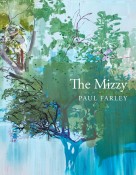
Paul Farley was born in Liverpool and studied at the Chelsea School of Art. He has published six collections of poetry with Picador, including The Boy from the Chemist is Here to See You, which won the Forward Poetry Prize for Best First Collection, and The Ice Age, which won the Whitbread Poetry Award. ‘Beach’ (whose narrator spends the night inside a beached whale) is from his poetry collection The Mizzy (2019), which was shortlisted for the T.S. Eliot Prize and the Costa Book Awards.
‘How To Speak Love in a Storm?’ by Stewart Henderson
How to speak love in a storm? / is to put up a signpost for the lost, / as on the bitter hillside / you lie murmuring, / ‘Why is this happening now?’ / Exposure, like a fox, / circling your lamb’s heart.
Stewart Henderson is a Liverpool-born best-selling poet, song lyricist, and award-winning broadcaster. He has published over a dozen poetry collections, including A Poet’s Notebook: with new poems, obviously (2018), Urban Angel (2000), and Assembled in Britain (1986). Henderson has also authored three volumes of poetry for children, with poems from those books included on the UK National Education Curriculum. He hosted the program Questions, Questions on BBC Radio 4 for eight years.
‘Aubade on Piazza del Popolo with Saxophonist and Chopin’ by Ashna Ali
Gray and blue and purple wafting behind him / more ancient than any ruin, even as they slide / into light. He grew me into something else, this boy.
Ashna Ali is a queer and disabled Bangladeshi American poet. They earned their MFA from Randolph College where they were a Nancy Craig Blackburn ’71 Fellow. Ali is the author of The Relativity of Living Well (Bone Bouquet, 2024). The recipient of additional fellowships from Brooklyn Poets and In Surreal Life, they live in Brooklyn, New York, on unceded Lenapehoking land.
‘Audience’ by Derrick Austin
Fra Angelico knew what to withhold, scripture being a shared language, and painted details, not props. The door to hell kicked off its hinges, indelible, sure. But the nails. The bent nail.
Derrick Austin is the author of This Elegance (Boa Editions, 2026); Tenderness (Boa Editions, 2021), winner of the 2021 Isabella Gardener Award; Trouble the Water (Boa Editions, 2016). His other honours include the 2026 AICA-USA Art Critics Fellowship and the Amy Lowell Traveling Poetry Fellowship. He currently lives in Oakland, California.
‘The Amenities’ by Heather McHugh
in those days I romanticised / a risk (I thought I’d die / in the alcoholic automobile, die / at the hands of nerveless dentistry). Small hearts / were printed in the chequebook; when my parents called me / dear, they meant expensive.
Heather McHugh entered Harvard at the age of sixteen and later did graduate work at the University of Denver. Her first book of poems, Dangers, was published in 1977. Subsequent volumes include To the Quick, Hinge & Sign, The Father of the Predicaments, and Broken English: Poetry and Partiality, a collection of essays. Her translation work includes Euripides’ Cyclops and Glottal Stop: Poems of Paul Celan (with her husband, Nikolai Popov). McHugh has taught at many universities, including the Iowa Writers’ Workshop.
‘Driving to Santa Fe’ by Paisley Rekdal
fragile. The treasure of him, like anything, / gone. Even now, I thumb that face / like a coin I cannot spend. If I ever lived, / I lived in him, fishing the cold / trout-thick streams, waking to snow, dying / when he died, which is a comfort.
Paisley Rekdal is the author of four books of nonfiction, and seven books of poetry, most recently, West: A Translation, which won the 2024 Kingsley Tufts Poetry Award and the Mountains and Plains Booksellers Reading the West Poetry Award, and was longlisted for the National Book Award. Her work has received the Amy Lowell Poetry Traveling Fellowship, a Guggenheim Fellowship, an NEA Fellowship, and various state arts council awards. The former Utah poet laureate, she teaches at the University of Utah where she directs the American West Centre.
‘Missing’ by Mary Morris
On anniversaries of their departures / they blow kisses in wind from behind / mountains or sing in disguise through /gale or bird. Then silence. Waif thin.
Mary Morris is the author of four books of poetry, most recently Lanterns in the Night Market (2025 Texas Review Press). Her work has also been widely published in literary journals. She received the Rita Dove Award, the Western Humanities Review Prize in Poetry and the New Mexico Discovery Award. She lives in Santa Fe, New Mexico.
‘At the end of the world, you tell me about the bees’ by Muriel Leung
Loss made me, iron-hot, shaped me. / Without this ember grief, only burnished / light remains. Snowless.
Muriel Leung is a poet and author of the poetry collections Imagine Us, the Swarm (Nightboat Books, 2021), winner of the 2022 Poetry Society of America’s Four Quartets Prize, and Bone Confetti (Noemi Press, 2016), as well as the novel How to Fall in Love in a Time of Unnameable Disaster (W. W. Norton & Company, 2024), winner of the 2025 Lambda Literary Award for Bisexual Fiction. Based in Los Angeles, she teaches in the MFA in Creative Writing program at California Institute of the Arts.


Recent Comments