
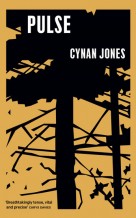
Made of blood, breath and soft underbellies … here are some of the best short stories I read in the first half of 2026.
‘Pulse’ by Cynan Jones
The title story of Cynan Jones’ recent collection is both compellingly immediate and quietly devastating. On the surface, ‘Pulse’ is the tale of a fierce storm that threatens to bring down a tree on power lines over a young family’s home. In and around this scene, Jones offers a vivid picture of a couple who have become distanced from each other while caring for a baby they hadn’t expected and living life on a property that’s sapping their energy. They’re as close to toppling as their nearby trees are after one tree is removed from the stand.
Jones has said: ‘Much rural fiction I’ve read by contemporary writers often feels quite fake, written from the point of view of a visitor, rather than a native’. Happily, I can confirm that this collection reveals Jones’ deep intimacy with and understanding of rural territory. Here’s a quote …
– Shall I lift her into the cot?
He could tell before she answered. He understood because he, too, felt that the little one had become, to each of them separately, their most safe point. That if they were within reach of her breath the rest of the world went away. Nothing more mattered, not even each other.
I miss you, he wanted to say. I miss you beyond any means I have of coping with the distance you have gone.
– I’ll go on the pullout. It’s fine, he said.
Cynan Jones is a Welsh author of five short novels – The Long Dry, Everything I Found on the Beach, Bird, Blood, Snow, The Dig, and Cove – and Stillicide, a collection of twelve stories commissioned by BBC Radio 4 that aired over the summer 2019. He has been longlisted and shortlisted for numerous prizes and his work has been published in more than twenty countries, and short stories have appeared on BBC Radio 4 and in a number of anthologies and publications including Granta Magazine, Freeman’s, and The New Yorker. His latest collection, Pulse, was published by Granta Books in November 2025.
(And if you’re keen to read more of Jones’ work, I’ve previously featured his 2016 short story ‘The Edge of the Shoal’ here.)
‘An incautious hunger’ by Mark Spragg
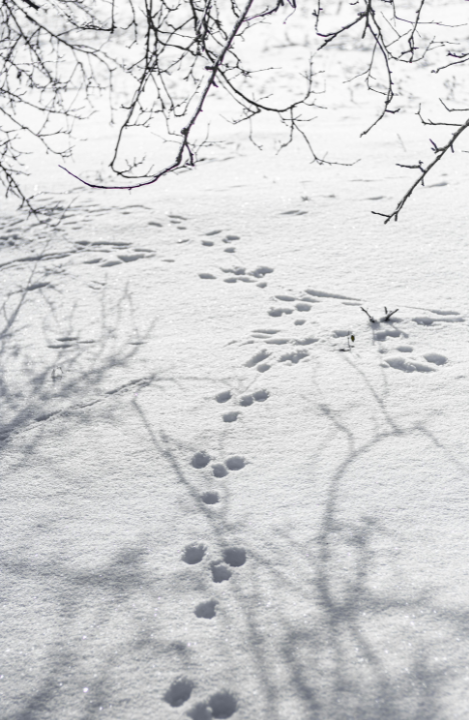 This is a profound and beautiful story told from the perspective of an older male bear who is grappling with the threats around him as they grow more frequent. He is driven by instinct but also cognisant of how his mother was lured away by humans. He needs to feed himself or he will not survive and yet, in his quest for meat, he is becoming less careful. Some final injuries slow him down and we see his time is coming to an end – an inevitable fate to which he will knowingly and nobly surrender. Here are some quotes …
A dozen wolves patrol at the perimeter of his threat, just out of his reach, indignant and baleful. The bison was their kill. The adolescents voice their frustration in yips and snarls, the bolder adults advancing in useless sorties, the elders lounging in the timber, like him, practiced in their patience, their acceptance of the hierarchy of predation, of peril, of opportunity.
The colour of fresh blood striking and vital in the snow: crimson, garnet, burgundy, aging finally to rust, and always, under a new moon, drained of colour. Every creature’s blood, on a dark and overcast night, appears black as obsidian, as lustreless as coal.
Mark Spragg is the author of Where Rivers Change Direction, and the novels The Fruit of Stone, An Unfinished Life, and Bone Fire. All four were top-ten Book Sense selections. His work has been translated into eleven languages.
‘The History of Sound’ by Ben Shattuck
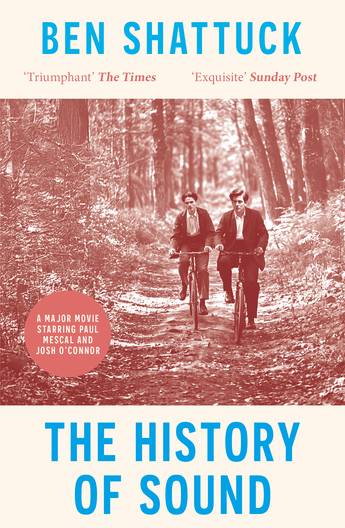 The title story in Shattuck’s collection had a profound effect on me. Even if you’ve seen the movie (starring Paul Mescal and Josh O’Connor), you should still read the story as its prose is powerful and themes deeply evocative. As Shattuck says, his story asks: ‘What if we only get one chance at real love, and you spend the rest of your life wondering how you could have kept it?’ Lionel and David are students when they meet around a piano in a bar and go back to David’s room together. Soon after, David serves in the First World War, and the lovers lose touch for a while. Post-war they spend several weeks one summer walking and camping in the forests and on the coast of Maine collecting folk songs. Much later in life, Lionel is sent twenty-five wax phonograph cylinders, which hold their folk recordings. What he hears when he replays them brings the past rushing back, and with it a reckoning. Here’s a quote …
Not like the baroque music I began to love at the Conservatory, sharp and abstract and ornate like coldly glittering pieces of jewellery. The folk songs had soft underbellies, could put a lump in your throat just by the melody. Emotion in song; nothing fancy.
Ben Shattuck is the multi-award-winning author of Footsteps of Henry David Thoreau (Tin House, 2022) and The History of Sound: Stories, (Viking 2024) the title story of the latter released in 2025 as an internationally acclaimed film. He lives with his wife daughter on the coast of Massachusetts, where he owns and runs the oldest general store in America, built in 1793. He is also the founder and director of the Cuttyhunk Island Writers’ Residency.
‘An Eye in the Throat’ by Samanta Schweblin, translated by Megan McDowell
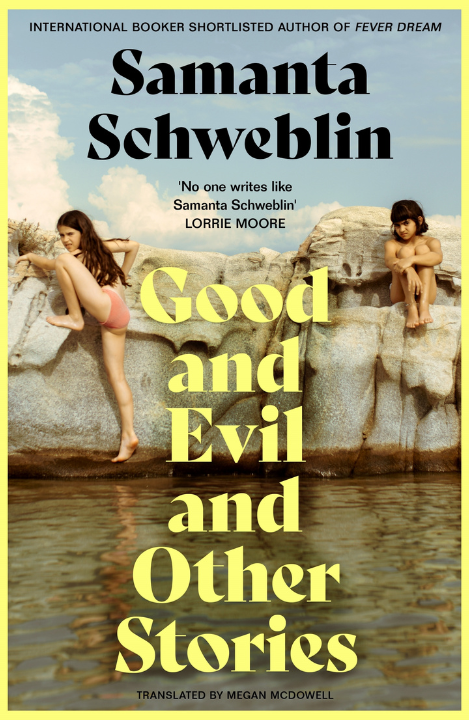 Argentinian author Samanta Schweblin has been described as a modern master of uncanny fiction and ‘An Eye in the Throat’, from her collection Good and Evil and Other Stories, is certainly unsettling. A child swallows a battery under the supervision of his father. After a pit-stop on the long drive home from one of the many hospital visits the family must make to get the child treated for the damage the battery caused, the parents realise that he isn’t in the car with them. The child is found unharmed and he accompanies them home. In the months and years following, nightly mysterious calls prod at the father until decades of their repetition render them almost comforting. What is less comforting is the emotional distance that has opened between the father and his family. As the boy ponders his tracheotomy scar, he asks himself: ‘[I]f I stick a finger in the hole that is mine but that hurts in the body of another, if I probe it, if I prod it, what I touch in there – is that my father?’ Here’s a quote …
Night has fallen by the time we reach the service station, and there’s a line for the pumps. It’s a Friday in the busy season, and amid the noise of car doors opening and closing, people talking and shouting, my parents do what they can to keep me from waking. Very slowly, Mom moves out from under me, lays me down on the back seat, and covers me with my yellow blanket.
She leans forward and whispers, “You want some coffee?”
My father turns and looks at her. He gazes at the hair falling long and loose over her chest. After this trip she will always wear it short, and she’ll stop sharing a bed with him, sleeping instead on a mattress on the floor of my room. My father is so tired that he is slow to answer.
“Coffee it is, then,” whispers Mom.
Samanta Schweblin is the author of the novel Fever Dream, a finalist for the International Booker Prize, and the novel Little Eyes and story collection A Mouthful of Birds, longlisted for the same prize. Chosen by Granta as one of the twenty-two best writers in Spanish under the age of thirty-five, she has won numerous prestigious awards around the world. Her books have been translated into thirty-five languages, and her work has appeared in English in The New Yorker and Harper’s Magazine. Originally from Buenos Aires, Schweblin now lives in Berlin.
Megan McDowell is the recipient of a 2020 Award in Literature from the American Academy of Arts and Letters and has been short- or longlisted four times for the International Booker Prize. She lives in Santiago, Chile.
‘The Emerald Light in the Air’ by Donald Antrim
 ‘In less than a year, he’d lost his mother, his father, and, as he’d once and sometimes still felt Julia to be, the love of his life …’ – what a compelling opener to this disquieting story that shows just how much loss can change a person. Sometimes loss cracks people open so completely that daily life’s frustrations, ‘even the big ones’, no longer rule them. Billy French is heading to the dump with his ex-partner Julia’s artworks and a box of his old comics. He is also thinking about the dinner he has been preparing for the woman he lost his virginity to when they were youths. After stopping to move a fallen bough blocking the road, his car plunges down an embankment. His efforts to rescue the car and get back on track lead him to drive along a riverbed where the car gets stuck on a boulder. Two boys find him and take him to a cabin where their mother is dying, and their father is keeping vigil. The boys believe Billy is a doctor, but the father soon realises he is not. Yet, Billy does offer the woman several things that will help her, including a pill he administers, and after which he steps outside trembling. This is when we learn in detail about the electroconvulsive therapy he has endured after Julia left him to marry another man. The story seems simple, but it has a deep and disturbing current running through it. It is only later that I realised Antrim had electroconvulsive therapy to help him ‘find his way back from suicide’. Here’s a quote …
After Julia left, in his worsening he’d walked and moved as if crushed by some stronger form of gravity. The air had pressed him down, and he could not get out from under it. Some days, he’d curled in a ball on the floor and promised himself that soon, soon, soon – it would be his gift to himself – he’d walk up to the barn and lie down with the rifle.
The car was swamped. Or it wasn’t, exactly, but the creek had risen and the tires now made a wake. The Mercedes didn’t have much acceleration, and the steering felt loose. Billy powered over a high rock, or maybe a tree root – it was hard to see – then, suddenly, precipitately, the wheels dropped in front and the car slammed down and stopped.
Donald Antrim is the author of a memoir, The Afterlife, and three novels: Elect Mr. Robinson for a Better World, The Hundred Brothers, and The Verificationist. He is a contributor to The New Yorker and the recipient of grants from the Guggenheim Foundation, the National Endowment for the Arts, and the Dorothy and Lewis B. Cullman Centre for Scholars and Writers at the New York Public Library. He was a fellow at the American Academy in Berlin in 2009. At MacDowell, Antrim has worked on his fourth novel, a book about the life of his mother (sections of which have appeared in The New Yorker), and in 2025 he worked on a novel tentatively titled Must I Read All of Wittgenstein?
‘Car Crash While Hitchhiking’ by Denis Johnson
 This is the kind of story that rearranges your molecules. The feeling of the night, the crash and the people involved is so immediate, you sense you could walk up to one of them and touch their skin as the ambulances and cop cars nudge through the backed-up traffic … The aftermath is equally real and stark. Here’s a quote …
Down the hall came the wife. She was glorious, burning. She didn’t know yet that her husband was dead. We knew. That’s what gave her such power over us. The doctor took her into a room with a desk at the end of the hall, and from under the closed door a slab of brilliance radiated as if, by some stupendous process, diamonds were being incinerated in there. What a pair of lungs! She shrieked as I imagined an eagle would shriek. It felt wonderful to be alive to hear it! I’ve gone looking for that feeling everywhere.
Denis Johnson (1949-2017) was the author of nine novels, one novella, two books of short stories, five collections of poetry, two collections of plays, and one book of reportage. Among other honours, his novel Tree of Smoke won the 2007 National Book Award, and Train Dreams was a finalist for the 2012 Pulitzer Prize.
‘Sightline’ by Rachael Riley
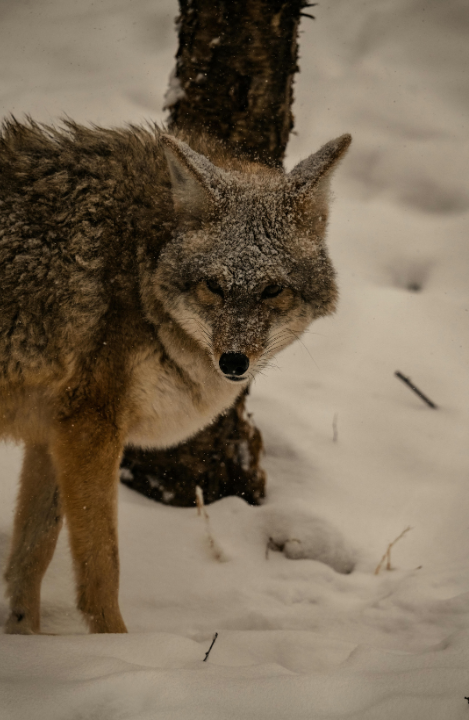 This is a beautifully rendered story of grief for the narrator’s recently deceased father. It is set in a cabin in the woods (one of my favourite places for stories to be set). Following their father’s funeral, the narrator holes up in the cabin he had maintained and develops an unexpected friendship with a neighbour. In touch with nature and confronted by reminders, the narrator is forced to acknowledge their complicated feelings for family and need to be comforted. Here’s a quote …
My father is dead. The thought comes while I examine the exposed white of the leg bones. My father has been not-dead my whole life and now he is the opposite. It feels wrong that such a change could come cleanly and quietly. There was no wound, no blood, no fight. No chewed-off leg.
I find isolation but no escape. My father is in the palimpsest of repairs, in the crooked coat hook. I hear him in the whir of the stubborn water pump that he cursed at like it was a misbehaving dog. When I sleep, I leave the curtains open. I do not want to think of curtains closing around his narrow hospital bed.
The first night the lake is solid, the moon is a half. It spills handfuls of light onto the once-water. The howls of coyotes rise up and I look out my window for the shadow of their movement against ice. I see nothing.
Rachael Riley (they/them) is a neurodivergent Pākehā (settler) writer from Aotearoa, New Zealand, currently living and working in Tiohti:áke, Montreal. Their poetry has appeared in Overcomm and LBRNTH, among others, and has been shortlisted for the Malahat New Horizons Award. Their fiction has received the Fence Reader’s Choice fellowship to the International Literary Seminars in Kenya and been longlisted for the Masters Review Anthology and the CBC Short Story Prize. They are currently completing their master’s degree at Concordia University.
‘Somewhere Warm’ by Bonnie Jo Campbell
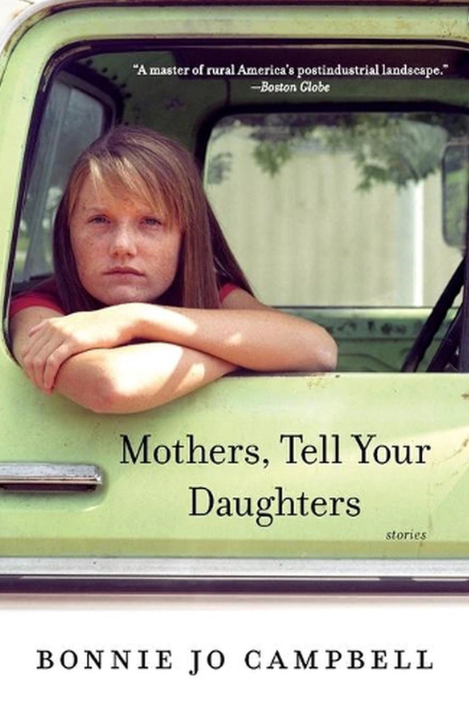 This was my favourite story from Bonnie Jo Campbell’s collection Mothers, Tell Your Daughters and it’s a memorable tale of love, betrayal, and big-heartedness. The Boston Globe has said, ‘Campbell trains her unsparing eye on women and girls whose lives are marked by abuse, teenage pregnancies, and philandering men’ – and ‘Somewhere Warm’ certainly plumbs these depths. It also shows how women and girls need to draw on their strengths and connections to one another to survive and thrive. Here’s a quote …
The truck driver imagined the girl’s ma was suddenly behind him, but it was only the scent of Sherry’s perfume on the pillows …
‘Is that why you came in here like this?’ he finally asked. ‘So you could get away with skipping school?’
‘Partly. And I think you’re cute. And I can tell you’re thinking about breaking up with my ma.’
‘Well, we shouldn’t have done this. It’s wrong. It’s about the wrongest thing I’ve ever done.’ The truck driver’s gut-wrenching regret and determination to repent lasted much of the morning, but by early afternoon he concluded that once you’d done something as bad as what he’d done, there wasn’t really any going back. As the weeks passed, the truck driver found that he loved lying in bed with this foulmouthed, freckle-faced, cigarette-stealing school-skipper more than anything. She was funny in her belligerence and smart-aleckiness, so alive and surprising. At fifteen she was a year closer to him in age than Sherry was at thirty-six.
Bonnie Jo Campbell is the author of seven works of fiction, including The Waters, a national bestseller, and American Salvage, finalist for the National Book Award and the National Book Critics Circle Award. The recipient of a Guggenheim Fellowship, she lives outside Kalamazoo, Michigan, with her husband and donkeys.
‘George & Susan’ by Joy Williams
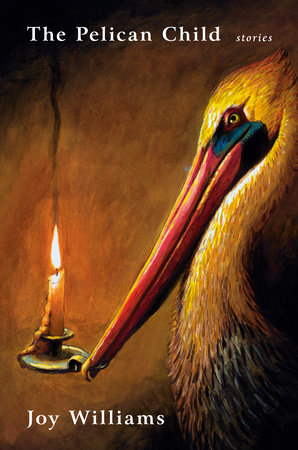 ‘George & Susan’ is both quirky and clever; a glittering jewel in The Pelican Child: Stories, the latest collection from Joy Williams. The George of the title is George Gurdjieff’s ghost who is in love with Susan Sontag – ‘How he longs to stroke her skunk-striped hair.’ His obsession takes him to 2409 East Drachman, the bungalow in Tucson, Arizona, where Sontag grew up in the 1940s. He describes it as the inauspicious place where she struggled against death and anonymity ‘when she was just a child, when she wasn’t even old enough to keep track of her socks. Here she worked worked worked, creating a self, as though from wax, a candle.’ The literary and philosophical musings in the story are many, so I was not surprised to learn later that George Gurdjieff was a philosopher, mystic, spiritual teacher, composer and movement teacher who died in 1949. Katherine Mansfield famously spent the final three months of her life living under his care at his Institute for the Harmonious Development of Man. Here’s a quote …
G is shocked at how his mind is sleepily toying with him. Susan, he thinks, sternly, Susan. I pledge … Fealty is a word that keeps bumping around him like a fly. Fealty. He has always been attracted to the follies of writers. Their pursuit is so unnatural, it is so willed. There was that one that came to him, the tubercular, the one they made all the fuss about, that Katherine person. But she lacked the moxie. Susan would have snapped her like a carrot.
Joy Williams is the author of four previous novels – including The Quick and the Dead, a runner-up for the Pulitzer Prize–and four collections of stories, as well as Ill Nature, a book of essays that was a finalist for the National Book Critics Circle Award. Among her many honours are the Rea Award for the Short Story and the Strauss Living Award from the American Academy of Arts and Letters. She was elected to the Academy in 2008. She lives in Tucson, Arizona, and Laramie, Wyoming.
‘A Dark and Winding Road’ by Ottessa Moshfegh
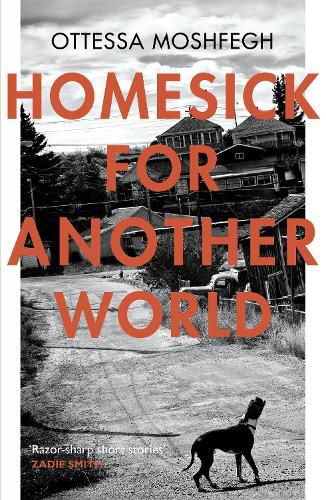 Charles retreats to a cabin to spite his pregnant wife and in the hope that she will come to appreciate him in his absence. He also wants to have one last weekend before the baby is born and his life, as it was before, is ruined. He smokes a few joints and starts to imagine his unborn son’s woe and resentment toward him and ‘everything bad he’d say about me to his own children after my death’. It’s during these musings that a girl named Michelle appears looking for his younger brother MJ. We learn how MJ was a loyal brother who dared Charles to do stupid things but Charles was a coward. ‘He could do whatever he wanted to me,’ Charles acknowledges, but Charles always knew he’d get back at MJ when the time was right. Read the story to find out how. Here’s a quote …
But the spirit of the place made me think of simpler times, olden days, yore, or whenever it was that people rarely spoke except to say there was a storm coming or the berries were poisonous or whatnot, the bare essentials. It was deadly quiet up there. You could hear your own heart beating if you listened.
Ottessa Moshfegh is a fiction writer from New England. Eileen, her first novel, was shortlisted for the National Book Critics Circle Award and the Man Booker Prize, and won the PEN/Hemingway Award for debut fiction. My Year of Rest and Relaxation, Death in Her Hands, and Lapvona, her next three novels, were New York Times bestsellers. She is also the author of the short story collection Homesick for Another World and a novella, McGlue. She lives in Southern California.
‘Property’ by Elizabeth McCracken
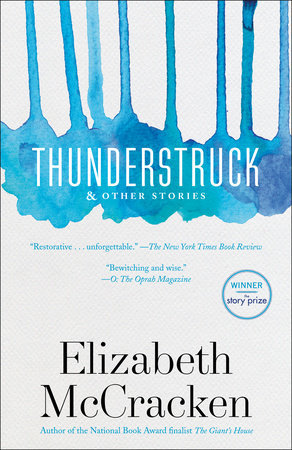 ‘Property’ is one of nine short stories in McCracken’s 2014 collection Thunderstruck and Other Stories and it was selected by Geraldine Brooks for The Best American Short Stories 2011. It features a young scholar who is grieving the sudden death of his wife and who feels compelled to refurbish the Maine rental house they were to share together because its furniture and knickknacks make the house feel more like a museum than a home to rent. His actions include removing his landlord’s possessions – a decision he later questions when he gains more insight into her personal history of loss and loneliness. Here’s a quote …
This was a house abandoned by sadness, not a war or epidemic but the end of a marriage, and kept in place to commemorate both the marriage and its ruin.
Elizabeth McCracken is the author of An Exact Replica of a Figment of My Imagination, The Giant’s House, Here’s Your Hat What’s Your Hurry, and Niagara Falls All Over Again. A former public librarian, she is now a faculty member at the University of Texas, Austin, and has received grants and awards from numerous organisations, including the American Academy of Arts and Letters, the Guggenheim Foundation, the Radcliffe Institute for Advanced Study, and the American Academy in Berlin. Elizabeth is married to the novelist and illustrator Edward Carey.
‘Amalur’ by Liadan Ní Chuinn
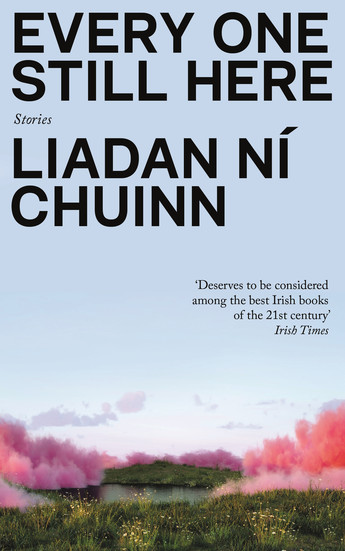 The stories in Liadan Ní Chuinn’s debut collection Every One Still Here skilfully blend the personal and the political with several set in the north of Ireland where Ní Chuinn was born in 1998. In ‘Amalur’, the protagonist’s boyfriend’s family are Basque people and the boyfriend’s father, Aitor, talks about how the government removed the language and they were fined for speaking it. Her boyfriend is a good man insofar as he is not abusive but he also stays silent about his brother-in-law’s abusive behaviour and retreats from other difficult subjects. Ultimately, the protagonist realises she and her boyfriend don’t ‘work [as a couple] without his family, that was the truth’. The fissures in her relationship with her mother have also deepened and become increasingly painful. Here’s a quote …
Yes, it was grieving. I grieved who I might have been. I missed my mother.
Since I was a teenager, she’d broken in my shoes for me.
She insisted. I had seen her feet bleed. She wore the shoes just until they softened, and would never hurt me.
Liadan Ní Chuinn was born in the north of Ireland in 1998. Every One Still Here is their first book.
‘The Lack of Noise’ by L.J. Bowden
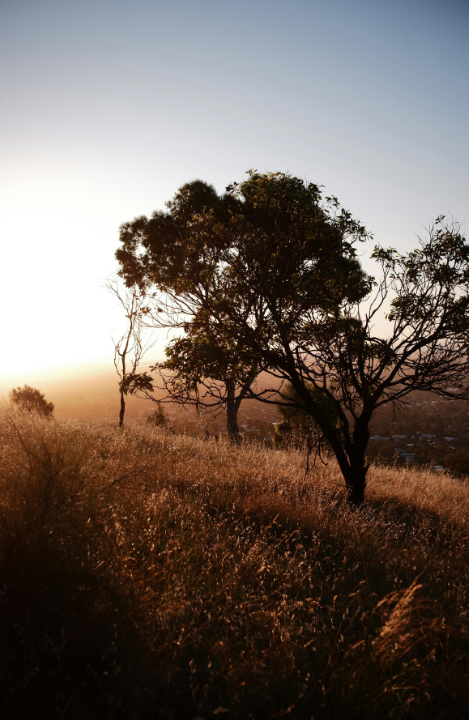 Guest Judge of the 2025 Masters Review Winter Short Story Award, Bret Anthony Johnston, said ‘The Lack of Noise’ (which won L.J. Bowden 3rd prize in the competition) is brutal and beautiful fiction, harrowing in ways that are at once original and universal. And I agree. Set in rural Australia, Vic learns firsthand about nature’s violence and the harshness of human relationships when his mother takes in her lover Anthony and Vic’s farmer Dad decamps to the shearer’s quarters. The rivalry between the men is fierce and, although it’s short lived, Vic is relieved by a reprieve during the calving season, when his mother, father and Anthony all have to deal with dystocia (when the calf gets tangled inside the cow) – ‘all of them up to their shoulders in organs, grabbing and shifting the calves’. Later, when the farm must be sold, necessitating a move to a housing complex, things change again, and Vic must manage his emotions around urban life and the silence he finds there. Here’s a quote …
He showed me how brittle skin and meat are, how soft they can get. It wastes away easily, especially in open country. Dad said that a fox will often eat the arse first, or if it were a lamb, the muzzle first, sometimes leaving it alive.
L.J. Bowden is a writer from South Australia, Kaurna Country. His fiction has appeared in West Trade Review, Going Down Swinging, and Swine. Bowden was a finalist for The Best Australian Yarn and the Phyllis Grant Zellmer Prize for Fiction and The Master’s Review Winter Short Story Award. He is currently undertaking an MFA in creative writing at Boston University.


Recent Comments