As Sydney’s weather warms up, here are some of the poems I loved most during the second half of 2026.
‘Heat Sink’ by Evelyn Araluen
today we didn’t have time to bury / the possum before work only enough / moments for a good morning / to the unanswerable grief out here / hollowing our histories before dawn
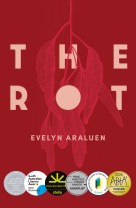
Evelyn Araluen is a Goorie and Koori poet, editor and researcher. Born and raised on Dharug Country and in the broader Western Sydney Black community, she now lives on Wurundjeri Country where she works as a lecturer at the Wilin Centre for Indigenous Arts and Cultural Development, as a co-editor of Overland Literary Journal and Chairperson for the Board of the Institute of Postcolonial Studies. Her debut poetry collection, Dropbear, won the 2022 Stella Prize, and her second collection, The Rot, was awarded the 2026 Victorian Prize for Literature.
‘Contemplations While Holding Sunchokes During a Blizzard’ by Yesenia Montilla
They say it has everything to do with money & power, but what they / want us to forget is that it is about how we love. We are fighting for the right to /// spend a storm inside / making soup & sourdough / & no one gets shot—
Yesenia Montilla is an Afro Latina poet, educator, editor, and translator. She earned her MFA in poetry and poetry translation from Drew University. Montilla is the author of Muse Found in a Colonized Body (Four Way Books, 2022), a finalist for the 2023 NAACP Image Award in Outstanding Literary Work–Poetry, and The Pink Box (Willow Books, 2015). Her poetry has also been anthologised in Latino Poetry (The Library of America, 2024), edited by Rigoberto González, and The Best American Poetry 2021 and 2022. Yesenia Montilla writes: ‘When Renée Nicole Good was murdered by ICE, I wondered what it would take for us to defeat that kind of evil. Is it to become as violent as the oppressor or to love more deeply? Capitalism asks us to make acquisition of things a priority and our relationship to one another performative. We are dying because of it. This haibun is an invitation for us to take stock of our own living, interrogate all the ways that we contribute to this system daily, and [ask] what the hell we are going to do about it.’
‘I Was Born Again the First Time I Lost Time Watching a Woman’ by Shira Erlichman
and mine a red kerchief’s splash and woo / at her throat / while down below / the stranger awarded me // an orange which I later peeled in one go while the snow ate my clothes like a man
Shira Erlichman is the author of the poetry collections Is (Alice James Books, 2028), Tangerapple (Alfred A. Knopf, 2027), and Odes to Lithium (Alice James Books, 2019), winner of the Audre Lorde Award for Lesbian Poetry and a finalist for the Lambda Literary Award for Lesbian Poetry. Her work as an author, visual artist, and musician explores recovery – of language, of home, and of mind. Her debut novel, Tangerapple, is forthcoming from Knopf in June 2027. She lives in Brooklyn with her wife.
‘Hi J, I Decided to Rewrite What I Sent to You’ by E. Ethelbert Miller For June Jordan
our friendship / is what keeps us whole / love is essential as air //
E. Ethelbert Miller is the author of two memoirs and several books of poetry. For 17 years, he served as the editor of Poet Lore magazine. He hosts the weekly WPFW morning radio show, On the Margin. He was inducted into the Washington, DC Hall of Fame in 2015. He was awarded the 2016 George Garrett Award for Outstanding Community Service in Literature. Miller received a congressional award from Congressman Jamie Raskin in recognition of his literary activism. He was a Spoken Word and Poetry album Grammy finalist in 2023.
‘What Carries Us’ by Emily Jungmin Yoon
the bird, the train, the whole thing / about metaphor, I said to say this, // that this is what carries us, the slow / consideration of what each other is, can be. // And first, there was the horse.
Emily Jungmin Yoon is the author of Ordinary Misfortunes, the 2017 winner of the Sunken Garden Chapbook Prize by Tupelo Press. Yoon was born in Busan, Republic of Korea and received her BA at the University of Pennsylvania and MFA in Creative Writing at New York University. She is a poet, translator, editor, and scholar whose work has been published widely.
‘Tower Scheherazade’ by Allen Austin
through hot, hushed nights, / she conjures, hour / by hour, from vapor, / a mind’s-eye tower / of unbound paper: / one thousand stories /or just one, climbing / slow as the moon / of shifting glories
Austin Allen is the author of The Travels of Blad J. Garamond (Measure Press, 2025) and Pleasures of the Game (Waywiser Press, 2016), winner of the Anthony Hecht Poetry Prize. He has taught creative writing at Johns Hopkins University and the University of Cincinnati.
‘Bildungssonnet’ by Billy-Ray Belcourt
I wanted a different / country, an old language to burst forth like / a hidden river. ‘Love is the cause of what / ails you,’ wrote Lauren Berlant. Oof. Most likely, / no man is a refuge.
Billy-Ray Belcourt is a writer and academic from the Driftpile Cree Nation in northwest Alberta. He is an Associate Professor in the School of Creative Writing at the University of British Columbia. He is the author of six books: This Wound is a World (winner of the Griffin Poetry Prize), NDN Coping Mechanisms: Notes from the Field, A History of My Brief Body, A Minor Chorus, Coexistence, and The Idea of an Entire Life. He lives in Vancouver.
‘Thirteen Ways of Looking at a Blackbird’ by Wallace Stevens
V
I do not know which to prefer, / The beauty of inflections / Or the beauty of innuendoes, / The blackbird whistling / Or just after.
Wallace Stevens was an American poet whose work explores the interaction of reality and what man can make of reality in his mind. Although he is now considered one of the major American poets of the twentieth century, Stevens did not receive widespread recognition until the publication of The Collected Poems of Wallace Stevens (Knopf, 1954), just a year before his death. His other major works include The Necessary Angel (Alfred A. Knopf, 1951), a collection of essays on poetry; Notes Towards a Supreme Fiction (The Cummington Press, 1942); The Man With the Blue Guitar (Alfred A. Knopf, 1937); and Ideas of Order (The Alcestis Press, 1935).
‘36’ from The Fire Passage by Lisa Wells
At night, a nougat moon / rose low over the caldera / ridged mountains soft / as thighs. // A girl could lie in that light, / singing with her female companions // and / I did want to. / As the spider dances in her web would I.
Lisa Wells is a poet, essayist, and documentarian. She is the author, most recently, of The Fire Passage, selected by Diane Seuss as the winner of the Levis Poetry Prize (Four Way Books, 2025). Her debut poetry collection, The Fix, won the Iowa Poetry Prize. Seuss says, ‘“I lived in terror and I loved the world.” This is a primary tension in Lisa Wells’ sublime The Fire Passage, which tracks an odyssey, in language at once apocalyptic, rapturous, erotic, and absurd, from flood, to fire, to air. The Fire Passage is an epic, in structure and scale, in physical, and metaphysical ambition. Wells has lowered her bucket into the Gilgamesh well, has drawn up the waters of Dante, and revived the archetypes required to confront our deadly contemporary moment.’
‘Example Sermon’ by Maya Salameh
LEVITICUS thick as fistfuls of February, purple horizon crackling / above our scalps like aluminum in a microwave, like the Lord / was trying to cook us clean.
Maya Salameh is is the author of Mermaid Theory (Haymarket Books, 2026) and How to Make an Algorithm in the Microwave (University of Arkansas Press, 2022), winner of the Etel Adnan Poetry Prize. Salameh is the recipient of a National Endowment for the Arts Poetry Fellowship, the Sewanee Review Poetry Prize, and the Markowitz Award for Exceptional New Writers. Her work has appeared in The Offing, Poetry, Gulf Coast, The Rumpus, AGNI, Mizna, and the LA Times.
‘Our Story’ by William Stafford
Remind me again – together we / trace our strange journey, find / each other, come on laughing.
William Stafford was a prolific writer, a famous pacifist, a respected teacher, and a literary mentor to many. He is one of the great American poets of the twentieth century. His first major collection, Traveling Through the Dark, won the National Book Award. He published more than sixty-five volumes of poetry and prose and was Poetry Consultant to the Library of Congress – a position now known as the Poet Laureate. As one of ‘the quiet of the land,’ as he often described himself, Stafford is known for his unique method of composition, his soft-spoken voice, and his independence from social and literary expectations. In life, as in his poetry, he rejected loud conflict and social and political aggression enjoining people to be reasonable and gentle with each other.
‘After Words’ by Kelly Beard
I stood at the door and flashed / on a day the week before / he died, when I asked him / what was he living for, really, what / was left for him?, a question borne / of bone-deep exhaustion and fear. / I expected him to point to me / or say our daughter’s name / but he said “poetry” instead.
Kelly Beard has been a lawyer, an activist, and a musician. Her memoir, An Imperfect Rapture (Zone 3 Press, 2018), won the Zone 3 Press Creative Nonfiction Book Award. She lives in Atlanta.
‘Cher moi’ by Afra Atiq
You built a spine out of marble and a ribcage out of sawdust from dreams / But you’re scared of your voice / Scared of being heard / I promise / You will grow into your words / The same way a hurricane rips through / Its surroundings
Afra Atiq is an Emirati poet, scholar, and interdisciplinary artist with a decade of experience at the intersection of education and culture. She holds a PhD in Creative Industries from UAE University and a Master’s in International Relations and Diplomacy. As an interdisciplinary artist, her work explores heritage, culture, and legacy. She has mentored writers and students and has been awarded for her poetry. Performing globally, she blends English, Arabic, and French, bridging languages and artistic expression.
‘He Brings Me Flowers, I Bring Him Distance’ by Martha Kamara
I thought love would be enough. / Thought softness could win. / But there are things / he can’t fix, / can’t carry, / can’t pray away. / And so, / I pull away, / slowly, / like closing a door / I wish could stay open.
Martha Kamara won the inaugural Theresa Matheson Bequest Award for an unpublished poet in 2025 for her poem ‘He Brings Me Flowers I Bring Him Distance’. Kamara: ‘Winning this award means more than recognition, it’s a moment of reclamation. “He Brings Me Flowers, I Bring Him Distance” came from a tender, often painful place in me, and to have this poem held and honoured like this makes me feel seen in a way I didn’t know I needed. As a Black Muslim woman, and a poet writing from the intersections of faith, trauma, and love, I’ve often felt like my voice lived on the margins. This win tells me, and others like me, that there is space for our softness, our grief, our healing, and our joy. I’m so proud of myself for telling the truth and letting it bloom.’
‘August, Los Angeles, Lullaby’ by Carol Muske-Dukes
the objects had been altered / imperceptibly: the gardenia / blooming in the dark / in the scarred water glass, / near the phone my handwriting / illegible, the patterned lamp- / shade angled downward and away /
Carol Muske-Dukes is an acclaimed American poet, novelist, and essayist who served as the Poet Laureate of California from 2008 to 2011. She has authored numerous works, including the poetry collections Sparrow (a National Book Award finalist) and Blue Rose (a Pulitzer Prize finalist). Beyond her personal writing, she was a professor emerita at the University of Southern California, where she founded the PhD program in Creative Writing and Literature. Passionate about community engagement, she also pioneered a creative writing workshop for incarcerated women at Rikers Island. Carol Muske-Dukes writes regularly for the New York Times Book Review and the Los Angeles Times Book Review. She lives in Los Angeles.


Recent Comments